
Key Takeaways
- The Toledo Museum of Art in Ohio launched COVE in 2017.
- COVE aims to lower workplace incidents and funnels revenue to the museum.
- The business’s workshop model and modules contribute to ongoing growth.
What can a Fortune 500 company learn from an art museum? Quite a lot, it turns out.
The Toledo Museum of Art in Ohio (TMA) has spent the past decade building its business, the Center of Visual Expertise (COVE), which educates employees on visual literacy, allowing them to spot and avoid hazards on the job.
In 2024, employers reported roughly 2.5 million nonfatal workplace injuries and illnesses in private industry and more than 5,000 fatal work-related injuries across all sectors, according to the latest data from the U.S. Bureau of Labor Statistics. These figures highlight the urgent need for innovative safety training programs that can effectively reduce risks in workplaces nationwide.
Building on Visual Literacy and a Track Record of Safety
The idea for COVE began to take shape in 2015, inspired by the foundation laid by TMA’s former director Brian Kennedy, who emphasized visual literacy as a core competency. This concept caught the attention of Mike Thaman, then CEO of Fortune 500 company Owens Corning and a museum board member, who saw potential in applying visual literacy to workplace safety.
Doug Pontsler, formerly Owens Corning’s vice president of operations, sustainability, and environmental health and safety (EHS), embraced this idea. Owens Corning, with its strong safety record—including winning the Green Cross for Safety from the National Safety Council (NSC)—served as a proving ground for integrating visual literacy into safety training.
“In the EHS space, the challenge is, how do you continue to get better?” Pontsler reflects. “Because if you’re not making progress in all aspects of environmental health and safety, you’re going backwards. You can’t just tread water.” His expertise as former president of the NSC’s Campbell Institute, which promotes best practices in workplace safety, further informed COVE’s development.
Nonprofit Doesn’t Mean For Loss: COVE Brings Returns
Applying TMA’s expertise in visual literacy to workplace hazards was a natural evolution. After developing a business plan and securing board approval, COVE launched in 2017. While the first year saw typical startup losses, COVE has generated consistent revenue for the museum ever since.
“We are a nonprofit, but nonprofit doesn’t mean for loss,” says Adam M. Levine, TMA’s director. “If you are a nonprofit that has fixed assets, then you must run a structural surplus, or else you are deferring maintenance. Sure, you could say that that’s what a capital campaign is for, but it would be nice to grow the organization rather than bail the organization out.”
COVE’s client roster includes notable public and private companies such as Owens Corning, PENTA Building Group, American Axle & Manufacturing, and DTE Energy—demonstrating its broad appeal and impact across industries.
The Workshop Model: Foundations of Hazard Identification
One of the initial challenges was translating art historical intellectual property into practical tools for frontline workers. COVE’s solution was a workshop model held primarily in art museums and led by instructors with EHS experience from major corporations.
Alongside in-person workshops, COVE offers licensing and train-the-trainer modules, enabling organizations to scale safety awareness across multiple teams and locations. Speaking engagements further amplify COVE’s reach.

COVE hosts 10-12 open workshops annually for employees from various companies, as well as dedicated sessions tailored to specific clients. Its flagship workshop, Seeing Safety: Foundations of Hazard Identification, introduces participants to visual literacy concepts and their relevance to environmental health and safety.
“We do become habituated to our environment,” Pontsler explains. “We’re around something so much that we just no longer see it. So we want to make the work environment fresh and new all the time.”
The workshops combine lectures with interactive exercises, applying art historians’ structured approaches to recognizing hazards. For example, just as artists use the five elements of art—line, shape, color, value, and texture—to compose images, COVE teaches participants to analyze work environments similarly. Spotting a stray cord, a precarious box, or worn stair treads becomes an intuitive process.
“When you’re used to seeing stairs, you look, and you see stairs,” Levine notes. “When you’re used to looking for texture, you see that the tread’s worn. So in some ways it’s as simple as giving someone an alternate framework to scan their environment.”
Every workshop includes a paired drawing exercise where one participant describes an object in the gallery and the other sketches it without seeing the object. This exercise emphasizes communication skills rather than artistic ability.
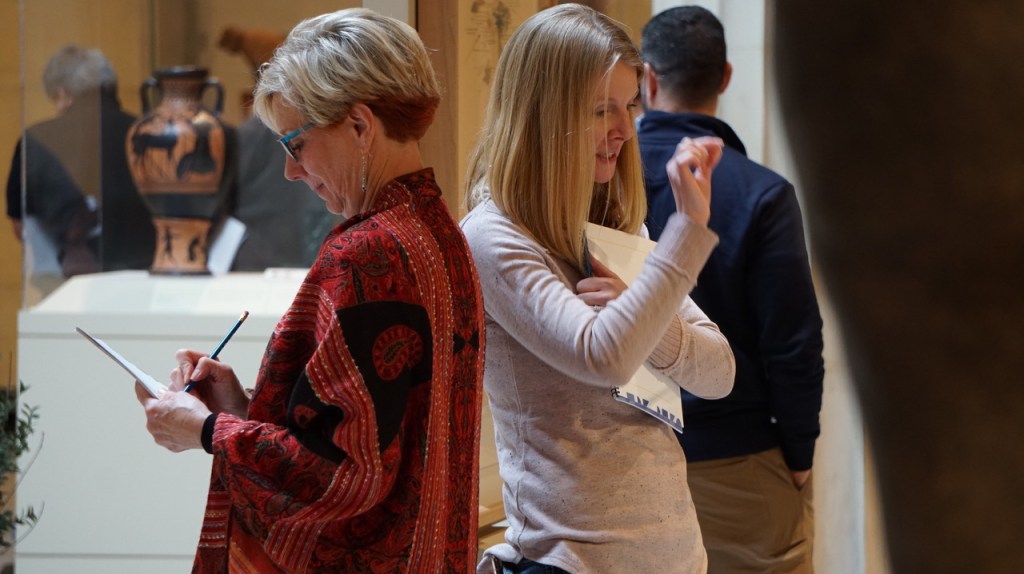
“They’re intimidated initially because it involves drawing,” Pontsler says, “but it’s really not a drawing exercise. It’s a communication exercise. And once people realize that, they get a big kick out of it.”
Pricing for workshops and modules varies based on client size, reflecting the tailored nature of the offerings. Success is measured by increased hazard reporting and decreased incidents, with one early client doubling hazard reports after engaging with COVE.
Art and Business: Reflect on the Past for a Better Future
COVE has expanded its footprint across North America, Europe, and Australia, with ambitious plans for continued growth. As a thought leadership enterprise, one of the biggest ongoing challenges is engaging enough people to fully embrace COVE’s mission.
“It’s not a product someone can order from Amazon that shows up at their desk, and they can do something with,” Pontsler explains. “We’re building human capacity to be better critical thinkers, problem-solvers and communicators.”
To maintain impact, COVE continuously assesses its messaging to identify what resonates and what needs adjustment.
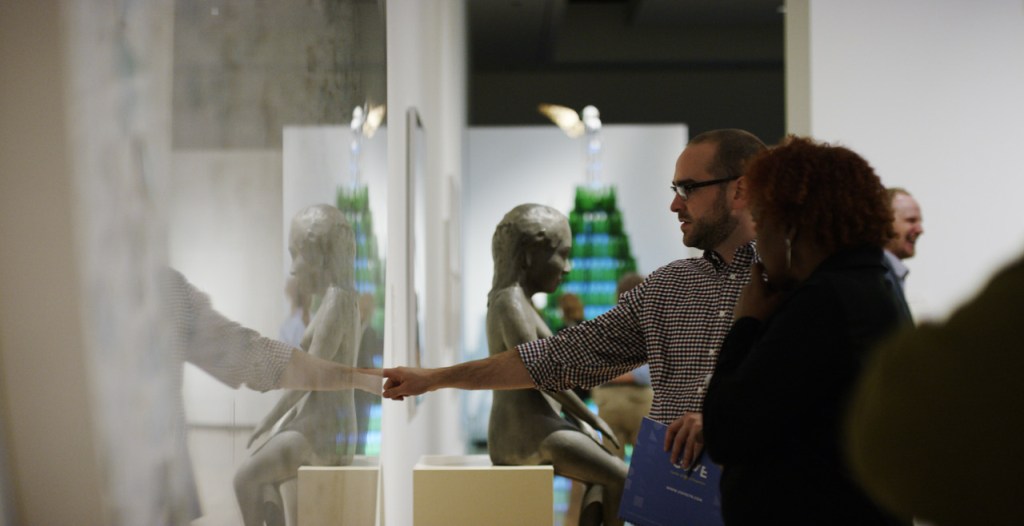
With nearly 40 years of experience at two Fortune 500 companies, Pontsler values COVE’s adaptability and willingness to move beyond what doesn’t work. “There’s a lot in the arts about reflecting on the past and what it’s taught us, and taking it and drawing interpretation from that in terms of what it might mean for our future,” he says. “And that’s what we’re trying to do in business. We’re just trying to learn and get better. Or at least understand where we are and why.”
For more details, visit the source Here.

