
How Norway Balanced Oil Wealth and Electric Vehicle Leadership
Norway’s remarkable transition to electric vehicles (EVs) alongside its continued role as a major oil producer is no coincidence. The country achieved this dual success through two long-standing and carefully crafted policy systems. On one hand, a combination of taxes and incentives made battery-electric cars more affordable and convenient than petrol or diesel alternatives. This strategy helped electric vehicles capture an extraordinary 95.9 percent of new passenger-car registrations in 2025. On the other, the government channeled its net petroleum revenues into the Government Pension Fund Global, applying strict fiscal rules to manage spending and safeguard the economy. Despite producing roughly two million barrels of oil and other liquids daily, Norway’s sovereign wealth fund was valued at 19.998 trillion Norwegian kroner at the end of March 2026.
At first glance, this duality—exporting fossil fuels while nearly eliminating combustion engine cars from domestic sales—might seem contradictory. However, the money generated from oil production does not directly subsidize electric cars. Instead, Norway designed one system to prevent petroleum wealth from destabilizing its economy and another to reshape consumer behavior toward sustainable transportation. Together, these systems have produced a unique national model that balances economic prudence with environmental progress.
The oil arrived before the rules were finished
Norway’s petroleum journey began with the discovery of the Ekofisk oil field in the North Sea just before Christmas 1969, announced by Phillips Petroleum. Production commenced in June 1971, ushering in a transformative era for Norway’s public finances, employment, and exports. The country’s official petroleum history highlights how Norway asserted sovereignty over its continental-shelf resources early on, refusing to grant exclusive control to any single company.
Unlike a poor fishing village suddenly struck by fortune, Norway was a well-established industrial democracy with strong shipping, fisheries, and hydropower sectors, as well as robust public institutions capable of taxing and regulating foreign oil companies. This foundation proved crucial when offshore oil discoveries scaled up dramatically.
Norway adopted a strategy combining heavy petroleum taxation with direct state involvement in oil fields and infrastructure. Statoil (now Equinor), the state-owned oil company, was founded in 1972, and through the State’s Direct Financial Interest program, the government held ownership stakes in licenses, pipelines, and facilities. Nearly all oil and gas produced on Norway’s continental shelf is exported, making these commodities account for 57 percent of the value of Norwegian goods exports in 2025.
The fund turned a temporary windfall into foreign assets
In 1990, the Norwegian Parliament established what was then called the Government Petroleum Fund to manage the growing oil revenues. However, weak public finances delayed initial transfers until 1996, with contributions accelerating as budget surpluses emerged. The fund was later renamed the Government Pension Fund Global, though it remains popularly called the oil fund.
The fund’s legal framework is precise: only the state’s net cash flow from petroleum activities is transferred to the fund, and withdrawals require parliamentary approval. Since 2001, Norway has followed a fiscal rule guiding spending from the fund to align with its expected real return—currently estimated at three percent annually.
This three-percent figure is a flexible guideline rather than a strict limit. The government may spend more during severe economic downturns and less in good times, balancing short-term needs with long-term sustainability. This approach prevents sudden surges in domestic spending triggered by volatile oil prices.
The fund invests exclusively outside Norway in a diversified portfolio that includes listed shares, bonds, unlisted property, and renewable energy infrastructure. By keeping capital abroad, the fund mitigates risks like currency appreciation and wage inflation domestically. It also transforms revenue from a finite natural resource into diversified global assets.
At the end of 2025, the fund held stakes in 7,201 listed companies and thousands of other investments across 68 countries. Its 2025 annual report recorded a 15.1 percent return, pushing its value to 21.268 trillion kroner. Silicon Canals has explored the fund’s extensive global influence in its report on how it votes across global markets.
Norway made the electric car the cheaper choice
The surge in electric car adoption followed a distinct political path fueled by early advocates such as Morten Harket of a-ha and environmentalist Frederic Hauge. Their public protests, including driving a converted electric Fiat through Oslo and refusing to pay road tolls, helped elevate EVs from a niche technology to a mainstream political and tax issue.
Rather than relying on a single subsidy, Norway implemented a multi-faceted incentive package. Battery-electric vehicles benefited from exemptions on purchase taxes and, from 2001, value-added tax (VAT), while petrol and diesel cars faced registration fees based on weight and emissions. This dual approach made electric cars not just environmentally attractive but financially advantageous compared to combustion-engine vehicles.
Practical benefits further sweetened the deal for EV owners. These included reduced tolls and ferry charges, access to certain bus lanes, and discounted parking in various locations. According to the national government, this combination of tax rules and user incentives was the primary driver behind the rapid adoption.
By the end of 2024, Norway boasted over 9,000 publicly available fast-charging stations for light vehicles, ensuring convenient access for EV users.
The impact of these policies is evident in the sales data. Battery-electric cars accounted for just 5.5 percent of new passenger-car registrations in 2013 but surpassed 50 percent by 2020. Their market share climbed to 88.9 percent in 2024 and then to an astounding 95.9 percent in 2025, according to Norway’s Road Traffic Information Council.
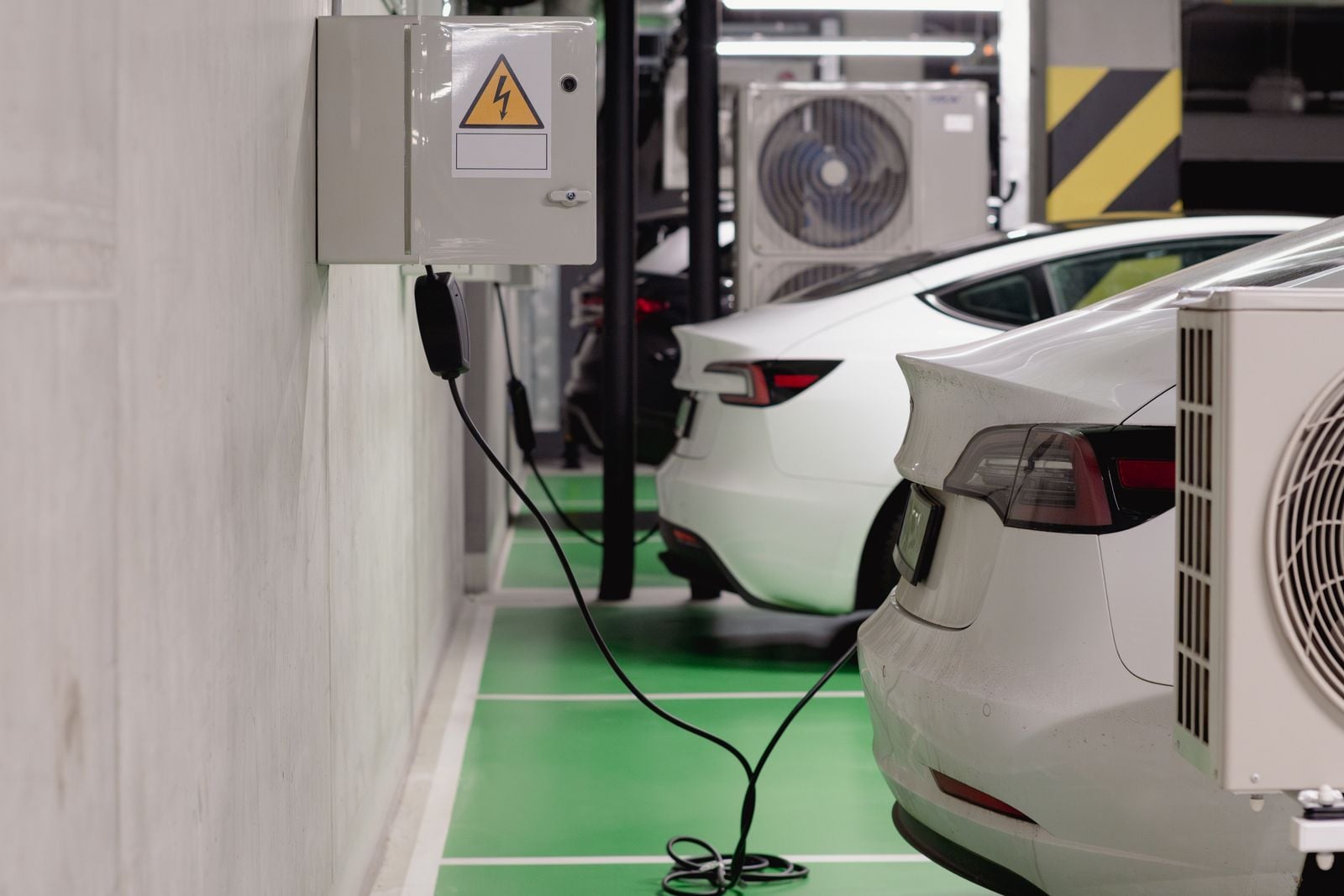
Notably, the 2025 figure refers strictly to fully electric battery vehicles, excluding plug-in hybrids and conventional hybrids. In 2024, plug-in hybrids accounted for an additional 2.7 percent of new registrations, but by 2025, fully battery-electric cars alone made up nearly 96 percent of new sales.
Hydropower made electrification more convincing
Norway’s electricity generation mix further bolstered electric vehicle adoption. Statistics Norway reported that hydropower supplied 89.9 percent of Norwegian electricity in 2025, with wind power contributing another 8.6 percent. This low-carbon power mix means charging EVs results in far fewer emissions than in countries reliant on coal or natural gas.
This advantage stems from geography and infrastructure, not from oil wealth. Norway’s mountainous terrain, abundant rainfall, and long-developed hydropower system provided a clean electricity supply well before modern electric cars hit the roads. While petroleum wealth expanded fiscal space, it did not create the rivers or dams powering the grid.
The electrification push also inspired aspirations for domestic industry growth in batteries, charging infrastructure, and electric transport technologies. For example, Silicon Canals previously covered the proposed FREYR battery project powered by Norwegian hydropower. Such initiatives indicate the ambition to leverage clean power for sustainable manufacturing, though Europe’s battery sector faces challenges in scaling competitive production.
Importantly, the sovereign wealth fund and the EV program operate independently. Petroleum revenues enter national finances via the fund and budget, while vehicle tax policies and exemptions are part of ordinary fiscal decision-making. It would be misleading to imply that each barrel of oil directly finances an electric car rebate.
The bill was large, and the advantages are shrinking
The financial cost of Norway’s EV incentives has been substantial, though difficult to quantify precisely. The Ministry of Transport estimated that in 2025, car-related tax revenues were about 50 billion kroner lower than under the 2007 tax system. However, not all of this difference is attributable to electric cars; factors like more efficient combustion engines, hybrids, toll discounts, and other policy changes also played roles.
As electric vehicles become the norm, the government has begun reducing support. For 2026, the VAT-free portion of an electric car’s price was lowered from 500,000 to 300,000 kroner, with plans to eliminate the exemption entirely in 2027. The Finance Ministry estimated the exemption’s value at 17.5 billion kroner prior to this reduction.
It is also important to recognize that the transition is not yet complete. By the end of 2025, electric cars made up 32.5 percent of Norway’s total passenger-car fleet. This means the majority of cars on the road still rely on other powertrains, and replacing an entire national fleet naturally takes far longer than changing the composition of new sales.
Furthermore, Norway’s domestic electrification success does not erase emissions associated with the oil and gas it exports. These emissions are accounted for in the countries where the fuels are consumed, yet petroleum remains central to Norwegian exports and state revenues. In essence, Norway has electrified its own roads while continuing to supply fossil fuels to Europe.
The two clocks are now running at different speeds
The Government Pension Fund Global is intended to outlast the life of Norway’s petroleum fields, but its value fluctuates with global markets and exchange rates. For example, the fund’s value dropped from 21.268 trillion kroner at the end of 2025 to 19.998 trillion kroner by the end of the first quarter of 2026, despite ongoing government inflows. A vast investment portfolio does not guarantee steady returns.
Norway’s model is challenging to replicate wholesale. Few oil-producing countries combine a small population, well-established institutions, massive offshore revenues, a hydropower-dominated grid, and decades of foreign investments. While the electric-car incentives can be individually emulated, the unique fiscal and energy context surrounding them cannot.
The critical question remains how quickly Norway can reduce its dependence on the petroleum industry that built the sovereign wealth fund. Oil and gas still represent over half of the value of Norwegian goods exports, while the growing fund is designed to support government budgets long after petroleum production declines. One system is preparing Norway financially for a post-oil future; the other has already transformed its domestic automobile market.
For now, both systems continue their distinct rhythms: offshore platforms produce oil and gas for foreign buyers, water flows through hydropower turbines in the mountains, and almost every new car sold in Norway moves away quietly, powered by electricity.
Read more here.

