
Singapore’s Millionaire Density and the Hidden Cost of Wealth
One in six households in Singapore now holds at least a million US dollars in investable assets, marking the city as Asia’s highest in millionaire density. Yet, alongside this impressive wealth concentration, Singapore ranks among the top three cities in the region for reported workplace burnout. Surveys indicate that a majority of Singaporean workers describe themselves as burned out. While the wealth line continues to rise, the wellbeing line is not keeping pace.
This stark divergence reveals a story hidden behind the city’s glossy skyline.
A City Built on the Promise That More Works
Singapore’s economic model exemplifies a tight feedback loop between effort and reward. With GDP per capita ranking among the highest globally, the city-state’s economic success is indisputable. Housing prices in the central core have soared dramatically over the past decade, and the number of family offices has increased rapidly, reflecting concentrated wealth accumulation. If the theory that money buys happiness held true anywhere, Singapore would be the place.
However, it isn’t.
Nationwide mental health studies reveal a significant portion of Singapore’s population experiences mental health conditions, with a worrying rise among younger adults — the very cohort expected to sustain the country’s productivity miracle. Working adults in Singapore report anxiety and depression symptoms at rates comparable to nations with far lower GDP per capita. Even those at the pinnacle of the wealth pyramid are not exempt; often, they are the ones running the fastest on the proverbial wheel.
The Hedonic Treadmill Has a Singapore Postcode
Psychologists term the phenomenon where each financial gain yields a shorter emotional high as hedonic adaptation. According to Psychology Today, happiness levels recalibrate within months after a raise, promotion, or new purchase. The dopamine spike fades, and the baseline happiness resets, pushing the next target further out of reach.
A landmark 1978 study of major lottery winners found that within a year, winners rated everyday pleasures — like morning coffee or a decent meal — lower than those who had never won. The mechanism is simple: when a private jet becomes your reference point, economy seats feel like punishment. When a Sentosa Cove bungalow is your benchmark, an HDB flat feels like failure — despite the fact that most Singaporeans live in HDB flats.
This condition is not unique to Singapore, but the city’s concentrated wealth amplifies it.
Income Helps — Until It Doesn’t
The relationship between income and mental health is complex but non-zero. A June 2025 Forbes analysis noted that individuals in the lowest income brackets suffer from anxiety, depression, and other mental illnesses at rates 1.5 to 3 times higher than those in the highest income brackets. A study from Chelsea, Massachusetts cited in the same article found that recipients of a US$400 monthly stipend had 27% fewer emergency room visits over nine months compared to those who received no stipend.
Money at the lower end of the income spectrum buys tangible relief: less panic, fewer sleepless nights worrying if the rent will clear.
However, the benefits of additional income diminish sharply at higher wealth levels. A longitudinal study of 1,538 Dutch adults published in SSM Mental Health in 2025 and covered by Healio tracked mental health five and a half years before and after retirement. The study found that income was the largest driver of mental health changes during this period, but with distinct patterns: low-income retirees experienced relief before retirement followed by decline; middle-income retirees showed sustained gains; and high-income retirees demonstrated little change, as their baseline was already stable.
Translated to Singapore’s context: the psychological return on your second million is a fraction of that on your first, and on your tenth million, it approaches zero.
What Singapore Is Optimising For, and What It Isn’t
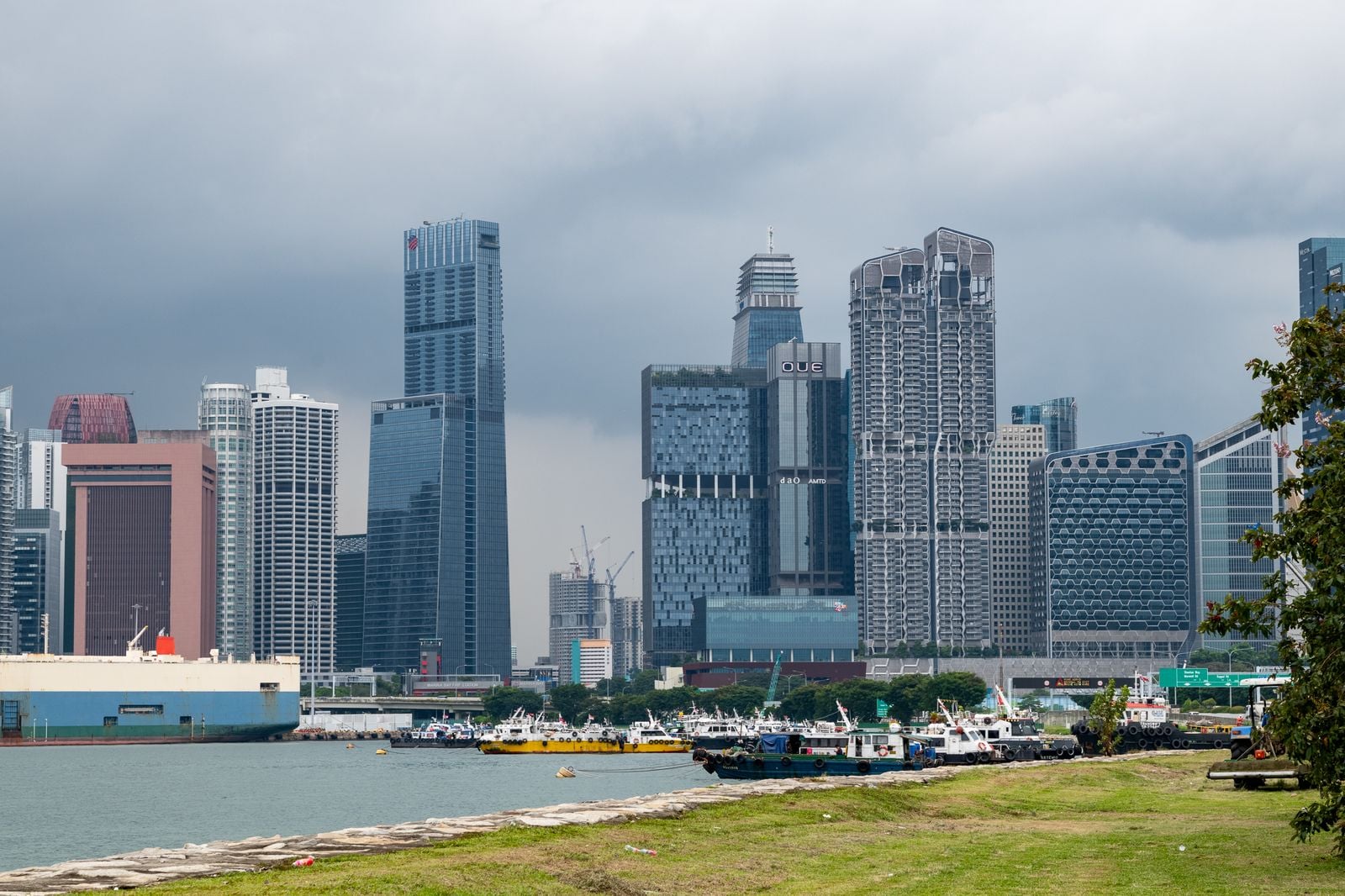
Singapore’s achievements are undeniable. Its efficiency, safety, and punctual public transit system are not mere marketing slogans but lived realities. Yet, the millionaire-density statistic masks what exactly Singapore’s optimisation measures—and what it omits.
A 2026 Forbes Nonprofit Council article argued that treating workplace wellbeing as a personal issue, separate from productivity and organisational outcomes, is increasingly untenable. The World Health Organization estimates that depression and anxiety cost the global economy billions annually in lost productivity.
Expanding on the concept of mental wealth—treating cognitive and emotional capital as foundational to any economy—the pattern is clear: erode mental health, and productivity eventually suffers.
For over two decades, Singapore has quietly run an experiment in reverse: optimising relentlessly for economic output while allowing wellbeing indicators to drift, watching what inevitably breaks.
The Comparison Trap in a Small Country
Singapore spans roughly 728 square kilometres—about the size of New York City’s five boroughs. Such density means the millionaire next door is a literal neighbour, not a statistical abstraction. The Ferrari in the school pickup line is the same pickup line your car joins. The condo listing clearing S$5,000 per square foot is in your postcode.
When your peer group is visible and physically close, the psychological pressure to keep up intensifies. Teenagers face a similar effect through social media. A 2025 Nature Human Behaviour study, reported by News-Medical, found adolescents with pre-existing anxiety or depression were disproportionately harmed by social media compared to healthy peers. The underlying mechanism is identical: a compressed reference group distorts perceptions of normalcy.
In Singapore, the reference group is not artificially compressed; it is geographically compressed. There is nowhere to look that isn’t someone else’s success.
What the Ones Who Stopped Chasing Tend to Say
Decades of longitudinal happiness research consistently show that the factors predicting a good life in one’s seventies rarely align with those rewarded in one’s thirties. Relationship quality, purpose beyond output, and the ability to enjoy ordinary days repeatedly emerge as key contributors to long-term wellbeing. The pattern is simple and often overlooked: fewer wants, more connection, and less focus on external validation.
Over two millennia ago, the Stoic philosopher Epictetus observed, “Wealth consists not in having great possessions, but in having few wants.” The phrase may sound like a fortune cookie maxim until you genuinely reflect on your own life.
The Number That Isn’t on Any Dashboard
Singapore publishes some of the world’s most detailed economic dashboards—GDP growth, housing indices, foreign reserves, MAS core inflation—all updated frequently. Yet, what the country does not publish, and what most others do not either, is a real-time indicator of whether its population is genuinely okay.
Mental health studies emerge every several years. Workplace burnout surveys, conducted by private firms, differ in methodology and scope. Suicide statistics, which recently hit their highest since 2000, arrive with delay and are treated as public health footnotes rather than headline economic indicators.
If the millionaire-density figure dropped for a quarter, it would dominate front pages. When mental health indicators deteriorate over a decade, they become policy papers.
What the Wealth Is Actually Buying
The one-in-six millionaire statistic is not a fabrication. It represents real assets, real money, and real security against catastrophic shocks that devastate lives in less well-managed economies. The Chelsea stipend study underscores the tangible value of financial security.
However, the figure does not purchase a corresponding improvement in the internal experience of those counted. This gap between balance sheet wealth and lived wellbeing manifests in burnout surveys, anxiety diagnoses, and family office founders who reach forty with everything they wanted — but no clear sense of what the next twenty years are for.
Singapore has demonstrated that a small city-state with limited natural resources can engineer itself into one of the wealthiest societies in history. What it has yet to prove—and what no country has—is that engineering can extend to the part of life that truly matters. Productivity and wellbeing are distinct variables. The nation that figures out how to advance both simultaneously will have built a model the current paradigm cannot match.
Until then, the one-in-six millionaire figure is best understood for what it is: a measurement of one thing, often mistaken for a measurement of everything.
Read more Here.

