
The Last Wolf Pack and Its Lasting Impact on Yellowstone
In 1926, federal employees, acting under government policy, eradicated the last wolf pack in Yellowstone National Park, America’s oldest national park. At the time, predators such as wolves were widely labeled as vermin, and their removal was seen as beneficial for livestock and game management. However, this decision set in motion a 69-year ecological experiment, demonstrating how the loss of an apex predator can profoundly and subtly transform a landscape over decades.
Initially, these changes were not apparent. Tourists continued to visit, elk populations remained robust, and photos from the 1930s show familiar Yellowstone vistas with its iconic valleys and geothermal features. The true consequences unfolded gradually, visible only through the slow growth of trees, the condition of streambanks, and the shifting habitats of various animal species.
The Bounty Economy That Emptied a Park
During the early 20th century, federal predator-control programs aggressively targeted wolves throughout the American West. Agencies such as the Bureau of Biological Survey and early park managers viewed large carnivores as threats to livestock and prized game species. To combat this, they employed traps, poison, shooting, and systematically destroyed wolf dens. Yellowstone was no exception; park personnel actively killed wolves within its boundaries.
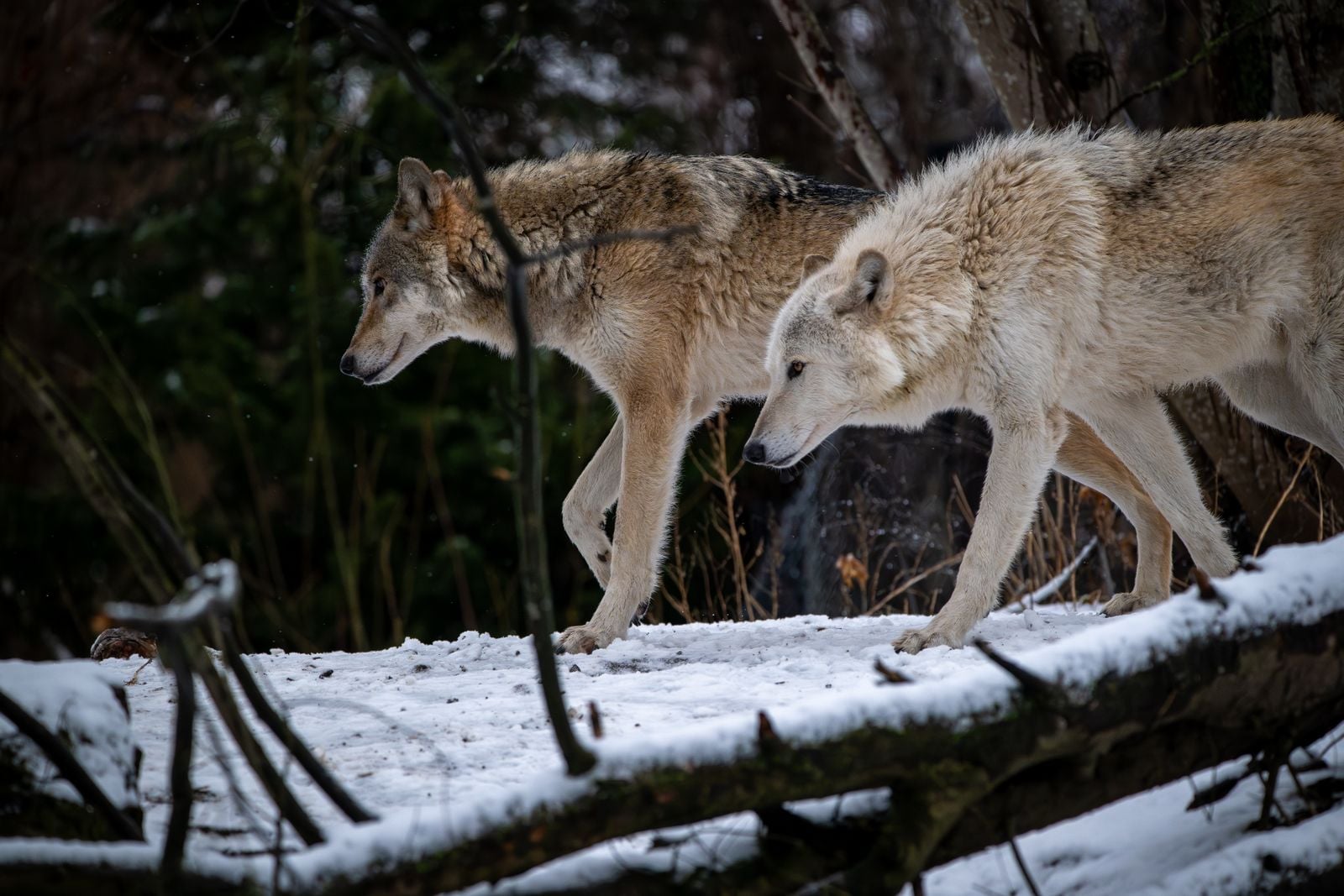
By 1926, these efforts had extinguished Yellowstone’s last known wolf pack. Although individual wolves were sporadically sighted afterward, a comprehensive survey in the 1970s confirmed that no established wolf population remained in the park. Gray wolves (Canis lupus) had been effectively eradicated from Yellowstone as a consequence of these government-led hunting programs (ScienceAlert).
This wolf eradication reflected a broader mindset that saw these predators as economic liabilities, removable without substantial ecological cost. Yet, as the years passed, it became clear that the park’s ecosystem had been intricately balanced on the presence of wolves, and their absence revealed complex and unforeseen interdependencies.
What Went Missing That Nobody Noticed
Following the wolves’ removal, elk populations surged, creating significant browsing pressure on vegetation in Yellowstone’s northern range. Although elk numbers fluctuated due to periodic culling and relocation efforts, once these interventions ceased in the late 1960s, elk populations rebounded rapidly. This resurgence placed renewed pressure on willows, aspens, and other woody plants.
Willows along streams often remained stunted or disappeared, while aspens produced shoots that elk frequently browsed before the saplings could mature. Research spanning decades documented poor recruitment in many northern range stands, with aspen increasingly represented by aging trees and few young replacements. This shift in vegetation had cascading effects on other species dependent on these habitats.
Beavers, reliant on willow and aspen for food and dam construction, declined sharply in some northern range areas during the 20th century. Birds that nest in mature aspens or riparian shrubs also lost critical habitat. Concurrently, the loss of beaver dams and riparian vegetation altered hydrological conditions—streams became incised, sediment erosion increased, and water tables dropped (Forbes).
These hydrological changes hindered the growth of young trees by destabilizing streambanks and increasing erosion, creating a feedback loop that made ecological recovery challenging even after browsing pressure eased.
The Failed Workaround
Recognizing the northern range’s ecological stress, the National Park Service undertook a program from the 1930s to the 1960s to reduce elk numbers via culling, capture, and relocation. These efforts substantially lowered elk populations temporarily. However, public and political opposition eventually ended the removals in the late 1960s.
While culling reduced elk numbers, it did not restore the predator-prey dynamics that wolves provided. Unlike natural predation, which exerts year-round, behaviorally complex pressure, human interventions were episodic and less spatially nuanced. Additionally, culling could not immediately reverse degraded stream conditions or the loss of beaver activity.
Following the cessation of culling, elk populations rebounded. The anticipated recovery of willows and aspens lagged, hindered by lingering ecological damage such as incised streams and low water tables. These changes had become self-reinforcing, illustrating the difficulty of reversing long-term ecosystem alterations.
Fourteen Wolves in Wooden Crates
In January 1995, wildlife officials reintroduced 14 gray wolves captured in Canada to Yellowstone, followed by another 17 in 1996. These wolves were acclimated in pens before release and fitted with radio collars to monitor their movements. This marked the return of breeding wolf packs to the park after nearly seven decades of absence.
The nearly seven decades between eradication and reintroduction were not an ecological void. Managers recorded fluctuating elk numbers, deteriorating woody vegetation, declining beaver populations in some watersheds, and ongoing debates regarding the northern range’s ecological drivers. The wolves’ return provided a unique opportunity to observe how the ecosystem’s complex web might again evolve.
The reintroduction story quickly gained widespread attention through textbooks, documentaries, TED talks, and viral videos. The narrative presented wolves as reducing elk browsing pressure, enabling the recovery of willows and aspens, facilitating beaver dam construction, and stabilizing streams. This popularized the concept of a trophic cascade, illustrating how apex predators influence entire ecosystems. However, this compelling storyline simplified a nuanced and multifaceted ecological reality.
The Rebuttal from Utah State
In recent years, the dramatic version of Yellowstone’s wolf story has faced scientific scrutiny. Researchers do not dispute the benefits of wolves but question how confidently changes can be attributed solely to their presence.
In 2025, a team led by Daniel MacNulty of Utah State University, along with David Cooper from Colorado State University, published a critique in Global Ecology and Conservation challenging a high-profile analysis of willow growth (ScienceDirect). MacNulty’s team argued that the reported 1,500% increase in willow crown volume was based on circular modeling assumptions, notably using plant height to both calculate and predict crown volume, thereby exaggerating the effect.
In 2026, MacNulty’s group published another commentary in Forest Ecology and Management addressing claims of aspen recovery (ScienceDirect). They recalculated the reported 152-fold increase in sapling density between 1998 and 2021 to a more modest 17.5-fold increase. They also pointed out methodological issues, such as treating repeated measurements as independent and allowing a few dense stands to skew averages. Their conclusion was that while recovery occurred, its scale had been overstated.
MacNulty emphasized that predator effects in Yellowstone are real but context-dependent, requiring robust evidence to support strong claims. Cooper concurred, noting the available data showed a more modest and spatially variable willow response influenced by hydrology, browsing, and local conditions.
The Finding That Survives the Fight
The scientific debate does not negate the wolves’ ecological importance. Instead, it nuances the understanding of the trophic cascade’s strength, distribution, and drivers. Most ecologists agree that restored predators contributed to changes in elk populations alongside human hunting, recovering bear and cougar populations, weather patterns, and other factors.
Predators also influence prey behavior, affecting where and how elk feed, though the magnitude of this behavioral effect remains debated. Vegetation responses vary across Yellowstone due to differences in water tables, snowpack, drought, bison browsing, and site history. Such complexity means that trophic cascades in large landscapes like Yellowstone are not simple on-off phenomena but intricate processes unfolding unevenly over time and space.
This complexity brings the narrative full circle to 1926. The wolf eradication removed not just a population but a key ecological force interacting with elk, plants, streams, beavers, bears, cougars, hunters, and climate. Elk browsing suppressed woody plants, and declines in willow and beaver activity altered stream systems. Individually manageable, these changes collectively reshaped Yellowstone’s northern range for generations.
The Policy Lesson the Numbers Still Argue About
In December 2023, Colorado began its own gray wolf restoration under a voter-mandated plan, releasing wolves into a landscape markedly different from Yellowstone’s. Ranchers, ecologists, and wildlife officials are closely monitoring the effects on livestock, elk, other predators, vegetation, and public attitudes. Whether Colorado will experience ecosystem changes comparable to Yellowstone remains to be seen, likely requiring decades of observation (Post Independent).
Colorado’s restoration will not mirror Yellowstone’s exactly. Its wolves inhabit a more fragmented and actively hunted landscape with distinct vegetation, waterways, livestock operations, and management policies. The ongoing debate over Yellowstone’s ecological changes informs what wildlife managers can responsibly expect and communicate. Predator restoration promises ecosystem benefits but may not replicate every aspect of the Yellowstone narrative.
The 69-year interval without wolves in Yellowstone did not yield a simple ecological baseline. Instead, it revealed documented declines in woody vegetation, beaver populations, altered stream conditions, and a complex debate over causation. The scale and extent of subsequent recovery remain contested, underscoring how slowly ecological damage can manifest and how difficult it is to reverse.
For those following this story, it resonates with the psychological insight that memory weighs experiences by their worst moments and endings rather than their total duration. Yellowstone’s wolfless decades offer a landscape-scale example: no single season looked like a collapse, but the cumulative effects unfolded over generations of trees, animals, and management decisions. The officials who eradicated the wolves believed they were removing a nuisance; it took nearly a century to reveal all they had inadvertently taken away.
Source: Here

