
Adyen’s Amsterdam Canal House: The Heartbeat of a Global Payment Powerhouse
Adyen, a global payment processor serving major platforms like Uber, Spotify, eBay, and Microsoft, operates from a historic canal house in Amsterdam. Despite its immense scale — processing billions of euros in transactions — the company maintains a remarkably lean engineering team that still shares lunch at one long communal table. This unique workspace exemplifies the company’s culture and operational efficiency, contributing to its extraordinary valuation per employee since its 2018 listing on Euronext Amsterdam, when it employed roughly 1,000 people worldwide. This headcount is smaller than the staff of a midsize convention hotel during peak times.
The Canal House That Clears Spotify’s Payroll
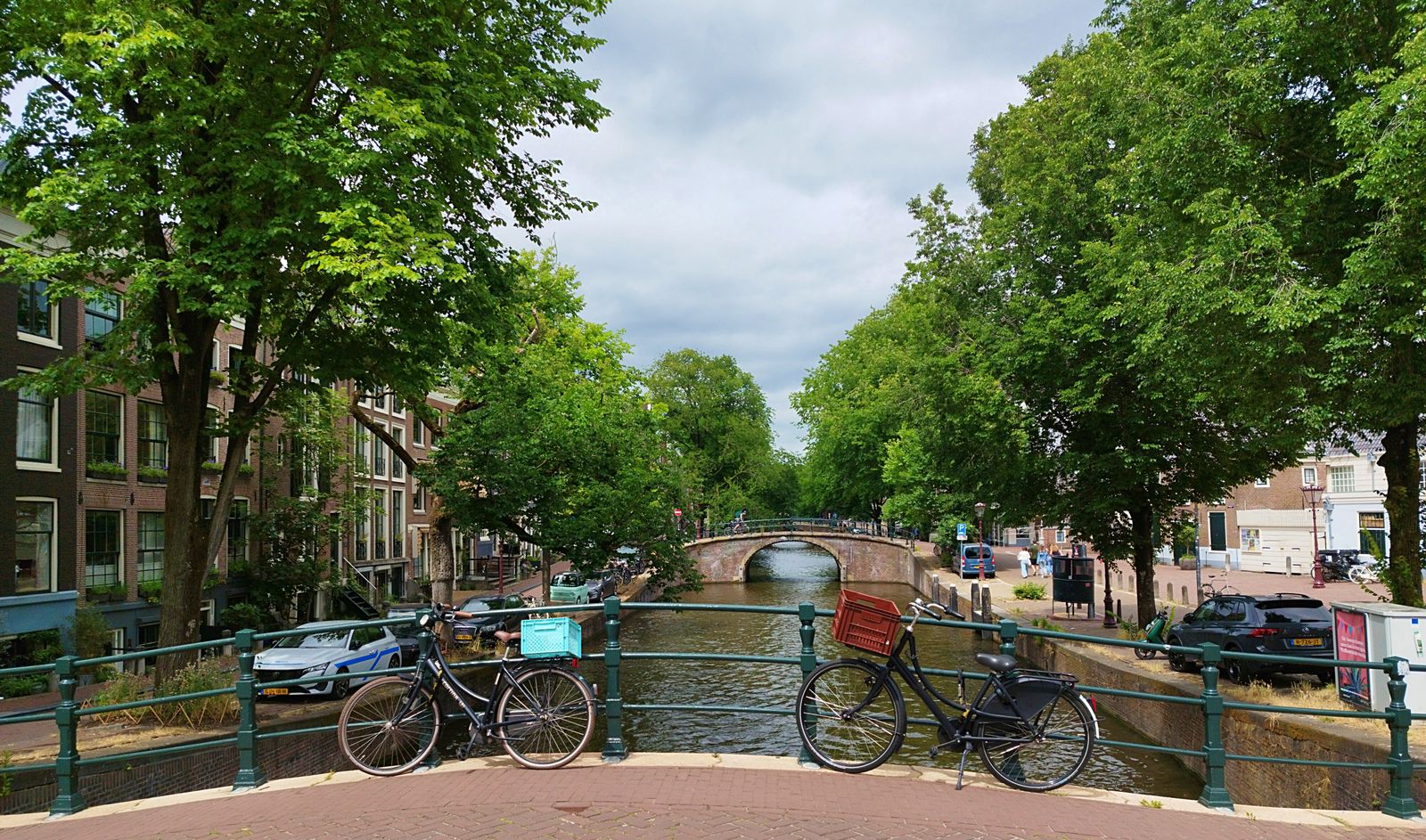
Adyen’s headquarters is nestled in Amsterdam’s historic center alongside a former canal leading to the Amstel River. The building’s interior is intentionally simple — no flashy glass meeting pods or themed lounges. The kitchen remains a kitchen, and employees from engineers to compliance officers and the CEO eat together at the same wooden table, a tradition dating back to when the company had only eight employees and a single platform to build.
The platform itself is a marvel of engineering, built as a single processing stack that authorizes card payments, manages risk, settles funds, and delivers reports to merchants seamlessly. This architecture enables Spotify, for instance, to accept diverse payment methods — from Brazilian debit cards to Japanese convenience-store vouchers and German SEPA direct debits — all through one API call. Unlike many payment processors that piece together legacy systems, Adyen deliberately built its platform from the ground up, avoiding the complexity and inefficiencies of stitching together acquired technologies.
How Small is Small?
When Adyen went public in 2018, it handled significant payment volume with just about 1,000 employees. By contrast, Stripe, a comparable Western fintech, had a similar headcount but a much lower market valuation. Today, Adyen employs several thousand people yet processes transaction volumes that equate to hundreds of millions of euros per employee — a level of productivity unmatched by traditional retail banks, which might require ten to twenty times the staff for the same volume.
This lean staffing model is both cultural and technical. Adyen eschews a sales-led growth approach, relying instead on a small commercial team and integration engineers to onboard merchants, with the platform handling the rest autonomously. There is no professional services division billing by the hour, nor a large team of solutions architects mediating between departments.
Why the Long Lunch Table Matters More Than It Sounds
While communal eating might seem like a quaint office tradition, it plays a crucial structural role at Adyen. Research on team cohesion and performance dynamics shows that cohesion emerges through frequent, low-stakes interactions rather than occasional retreats or workshops. Sharing meals is one of the highest-frequency interaction patterns a workplace can foster.
Moreover, studies indicate that when team members’ perceptions of shared goals diverge, the quality of interactions deteriorates before performance does. The single lunch table acts as an informal diagnostic tool: if, for example, the engineering lead and compliance officer no longer sit near each other, it’s noticed quickly, prompting timely intervention.
However, cohesion alone can stifle dissent. As noted in a 2025 Forbes essay by executive coach Elena Sarango-Muniz, excessive cohesion may suppress critical voices and create groupthink. Adyen counters this risk by fostering a culture of written challenge, where employees are encouraged to debate assumptions in writing before reaching consensus. The lunch table complements this culture; it does not replace rigorous intellectual exchange.
The Engineering Bet That Scaled to Microsoft
Adyen was founded by Pieter van der Does and Arnout Schuijff after selling their previous payment company to Royal Bank of Scotland. The company’s name symbolizes a fresh start — the founders deliberately refused to reuse any code from their former venture.
This fresh approach paid dividends with the rise of smartphones. Adyen’s platform, built during the emergence of mobile payments, was primed to secure processing mandates from global tech giants. The company’s “one integration, every market” model attracted top clients like Spotify, Airbnb, Booking.com, and Netflix, who valued the simplicity and scalability of a single payment integration across diverse geographies.
The CTO Transition and What It Didn’t Disrupt
When long-serving CTO Alexander Matthey stepped down, the transition was smooth and barely moved the stock price. This stability reflected the company’s organizational design: small, autonomous teams rather than dependence on a single visionary leader. The communal-table culture further distributes leadership and knowledge, making succession a natural process.
This approach mirrors lean, high-leverage European tech operators who emphasize small teams, a focused tech stack, and customer concentration in a few key global accounts.
The Economics of the Lean Stack
At the time of its IPO, Adyen’s net revenue was in the hundreds of millions of euros, with EBITDA margins significantly exceeding industry norms. Traditional acquirers typically operate with EBITDA margins in the high teens, demonstrating the financial advantage of Adyen’s single-platform, small-team model.
However, this model has risks. Customer concentration among mega-merchants like Uber, eBay, and Microsoft means that contract renegotiations can cause significant stock volatility. For example, in 2023, Adyen’s shares fluctuated sharply after reports indicated slowing growth in North America, as some U.S. merchants shifted to cheaper, lower-quality processors. Though the stock has largely recovered, the episode highlighted the vulnerability of a lean operator reliant on a compact but powerful client roster.
What the Small-Team Model Trades Away
Adyen’s discipline requires saying no — to acquisitions, side products, consulting businesses, and geographic expansion that could dilute focus. Unlike competitors, Adyen does not offer an Adyen-branded Buy Now, Pay Later (BNPL) product competing with Klarna, nor a lending division rivaling Stripe Capital, nor a white-label issuing business targeting neobanks.
This focus contributes to employee retention. Research on employee engagement and retention consistently finds that flat hierarchies and shared informal rituals reduce voluntary turnover during hypergrowth — precisely when fintech firms often lose senior engineers. Adyen has maintained notably low voluntary attrition during periods when U.S. fintech peers experienced higher churn.
The Cost of Running This Hot
The psychological demands of this model are significant. Organizational psychology research emphasizes psychological safety, noting that small teams under intense external pressure must develop strong norms for airing disagreements or risk implosion. At Adyen, a payments engineer working late has fewer colleagues to escalate issues to compared to counterparts at large banks like JPMorgan Chase. The single lunch table is also a narrow escalation path.
Whether this cultural compression can scale to 10,000 employees remains an open question. Adyen’s satellite offices in San Francisco, São Paulo, and Singapore replicate the communal lunch table arrangement but deliberately limit site size to a few hundred employees, effectively capping organizational complexity.
What the Canal House Actually Is
Adyen’s Amsterdam headquarters is far from a nostalgic relic; it is an engineered operational asset. Though the merchants using the platform — from Uber drivers in Lagos to Spotify subscribers in Jakarta — never see the building, the speed of bug triage, responsiveness to fraud signals, and willingness of compliance officers to interrupt engineers mid-lunch all stem from the environment fostered inside the canal house.
Nearly two decades after its founding, Adyen’s canal house still clears more transaction volume per employee than nearly any financial institution globally. And lunch is served promptly at one o’clock.

