
The Astonishing Sonic Weapon of the Pistol Shrimp
When marine acousticians first lowered hydrophones into tropical reefs in the early twentieth century, they reported a remarkable sound: a persistent crackle reminiscent of fat sizzling in a pan. This continuous noise overwhelmed nearly all other ambient sounds in the underwater environment. Submariners during the Second World War also noticed this persistent racket and occasionally used it as acoustic cover. The surprising source of this underwater symphony turned out to be an animal barely an inch long—the pistol shrimp. This tiny creature, hiding in its burrow, snaps its claw so fast that it vaporizes seawater, creating an extraordinary physical phenomenon.
The pistol shrimp’s oversized claw functions like a flintlock firearm. It rapidly closes the claw, propelling a jet of water so swiftly that it drops the surrounding pressure enough to vaporize the seawater itself. This creates a vapour bubble that collapses within a fraction of a millisecond. During the collapse, the gas inside is compressed to temperatures around 4,700°C—close to the sun’s surface temperature of approximately 5,500°C—accompanied by a brief, dim flash of light too faint for the shrimp to detect.
Feeding on worms, small crustaceans, shellfish, and occasionally fish that pass by its burrow, the pistol shrimp is an ambush predator. Its weapon, rooted in extreme physical principles, is so effective that engineers today are replicating its snapping mechanism for cleaning semiconductor wafers with unprecedented precision.
The Claw as a Coiled Spring
Pistol shrimp develop two claws of dramatically different sizes. The smaller claw resembles a typical shrimp pincer, while the larger claw, sometimes nearly half the shrimp’s body length, functions as a sophisticated mechanical device. The claw consists of two parts: the dactyl and the propus. On the dactyl sits a knob called the plunger, which fits snugly into a socket on the propus, much like a piston within a cylinder.
The shrimp holds the claw open by wedging the dactyl behind a small internal shelf, building tension akin to the way a crossbow holds a bolt. According to a detailed description of this mechanism, only adult pistol shrimp possess the muscular strength and joint geometry necessary to perform the full snap; juveniles are not yet capable of firing their claws with the same power.
Upon release, the dactyl snaps shut with incredible speed. The plunger slams into the socket, generating a high-velocity jet of water through a narrow groove. Crucially, it is this jet—not the claw’s mechanical closure itself—that delivers the lethal force.
Cavitation, Briefly Explained
While water boils at 100°C at sea level, it can also “boil” without heat if pressure drops sufficiently. This phenomenon, known as cavitation, is what damages ship propellers and hydraulic pump impellers in industrial machinery. Essentially, a fast-moving fluid jet creates a low-pressure wake, causing water molecules to vaporize and form a transient bubble.
In the pistol shrimp’s case, the jet moves fast enough that the seawater in its core vaporizes into a bubble. When the surrounding water rushes back to fill this void, the bubble implodes symmetrically at speeds exceeding the speed of sound in water. The gas trapped inside is compressed adiabatically, generating intense heat that cannot escape, concentrating energy within the tiny cavity.
This principle—rapid gas compression leading to extreme heat—is also observed in phenomena such as diesel engine ignition and thunder from lightning. Compress a gas quickly enough, and it essentially “cooks.”
The Flash the Shrimp Cannot See
High-speed cameras and photomultiplier devices monitoring captive pistol shrimp have revealed that each snap is accompanied by a fleeting flash of light. This effect is similar to sonoluminescence, where sound waves drive bubbles to collapse violently enough to emit photons.
The flash is extremely brief and dim—imperceptible to the human eye and, importantly, also invisible to the shrimp itself. The shrimp’s eyes are adapted for the dim blue-green light of shallow Atlantic waters and cannot register the light produced by their own claw snap. The bioluminescent flash is thus an incidental byproduct of the snapping process.
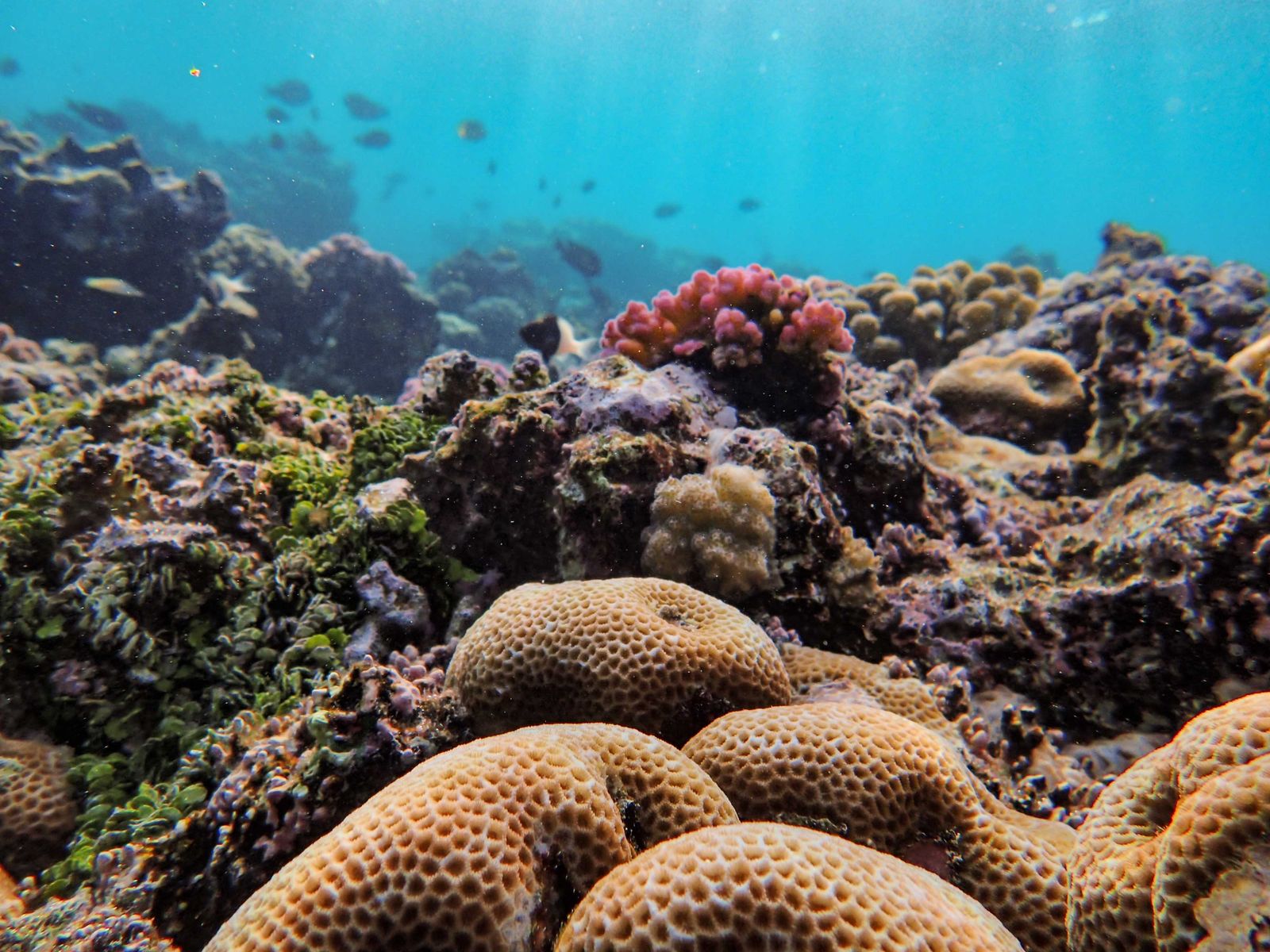
What truly matters to the shrimp is the shockwave generated by the bubble’s collapse. This pressure pulse radiates outward, stunning or killing prey several centimeters away without physical contact. The sound produced is louder than a gunshot or even a sperm whale’s click. In coral reefs at dusk, large colonies of snapping shrimp produce the characteristic “frying bacon” sound that once served as acoustic cover for wartime submarines.
Hunting by Physics, Not by Sight
The pistol shrimp’s hunting strategy centers on sensing rather than sight. It primarily relies on touch and chemical cues, often with antennae extended at the burrow entrance. The shrimp does not need to visually track its prey; it only needs to detect that something edible has entered its kill zone and then snap its claw in that direction.
Researchers at the University of Toyama in Japan modeled such basic predator-prey interactions, demonstrating that minimal sensory and motor rules—such as detecting an opponent within a range and responding accordingly—can give rise to stable hunting strategies like ambush, chase, or escape without requiring complex cognition. The pistol shrimp exemplifies the ambush strategy: it waits patiently, then fires explosively once, killing prey before the cavitation bubble even finishes collapsing.
A Weapon for Talking, Too
Not every snap from a pistol shrimp is intended for predation. These shrimp also snap their claws to communicate—warning rivals away from their burrows, advertising size, and possibly signaling sex. Interestingly, social snaps are deliberately weaker; the jet does not reach speeds sufficient to cause cavitation. Instead, the resulting pressure pulse acts as a warning that the intruder can detect without sustaining harm.
Pistol shrimp are also renowned for their symbiotic relationship with goby fish. The shrimp maintains a shared burrow, while the goby—with superior eyesight—stands guard at the entrance. When predators approach, the goby signals the shrimp with tail twitches, prompting the shrimp to retreat. This elegant partnership illustrates that even an animal equipped with a sonic weapon benefits from outsourcing its vigilance.
Within the invertebrate world, few species combine tool use, interspecies cooperation, and weaponized physics as seamlessly as the pistol shrimp. Similar behavioral sophistication is seen in sea otters, which use rocks as anvils to crack open shellfish—a remarkable example of mechanical problem-solving in animals.
Engineering Catches Up
Today, the pistol shrimp’s claw is more than a biological curiosity; it serves as a blueprint for advanced engineering. Scientists and engineers are studying the shrimp’s claw geometry to develop controlled cavitation techniques for industrial applications.
As biologist Scott Travers explains in a Forbes feature on the shrimp’s physics, the snapping dynamics are adapted for immersion cleaning of delicate surfaces. The technology works by generating focused cavitation bubbles near contaminated surfaces; their collapse produces micro-shockwaves that dislodge particles unreachable by ultrasonic baths or pressure flooding. Semiconductor manufacturers, in particular, are keenly interested, as even a single stray dust grain can ruin nanometer-scale patterned wafers.
This biological design, refined over tens of millions of years, now solves a problem first encountered in modern semiconductor fabrication in 2024.
The Numbers, Kept in Proportion
To appreciate this marvel, consider the scale: the pistol shrimp is roughly the length of a paperclip—about an inch. The water jet it fires lasts less than a millisecond. The resulting cavitation bubble measures just a few millimeters across, smaller than a pea. Inside this bubble, temperatures soar to approximately 4,700°C. An individual shrimp snaps hundreds of times daily, and colonies do so continuously, producing one of the dominant sources of ambient noise in tropical reefs, audible to any hydrophone lowered into the water.
By contrast, semiconductor wafers are patterned at nanometer scales—thousands of times smaller than the cavitation bubble. The shrimp-inspired cavitation cleaning targets precisely these tiny contaminants. This juxtaposition highlights an extraordinary trade-off: a tiny marine animal in a Gulf of Mexico sand burrow firing a sonic weapon at a worm, and a cutting-edge chip fabrication facility halfway around the world borrowing the same physical principle to produce the silicon that powers modern technology.
For further reading, see the original source Here.

