
The Most Common Type of Procrastinator: Insights from Over 13,000 Quiz Takers
Procrastination is a universal challenge that manifests in many forms, but which type is the most prevalent? According to data collected from 13,614 completions of a detailed procrastination quiz conducted between May 2022 and November 2026, the most common procrastinator profile is the Obsessive Idealist. This group accounted for 42.8% of all quiz takers, with an even higher share of 44.8% among 8,012 completions from organic site traffic.
It’s important to note these results are based on self-selected participants who voluntarily took the quiz on Addicted2Success.com; this is not a clinical diagnosis or a randomized sample. Nonetheless, the scale and consistency of the data provide valuable insight into procrastination patterns across a broad audience.
This masterclass explores three straightforward steps to work with your procrastination style—starting with identifying which of the six types best fits you. The system was originally created to address the creator’s own struggles as a recovering Obsessive Idealist, a pattern characterized by perfectionism and high achievement, yet also by chronic overloading and self-criticism.
Understanding the Six Types of Procrastinators: Data and Definitions
The procrastination quiz results rank the six types by prevalence:
| Type | Percentage (Combined 13,614) | Count |
|---|---|---|
| Obsessive Idealist | 42.8% | 5,833 |
| Dread Head | 23.5% | 3,195 |
| Star Gazer | 12.6% | 1,716 |
| Diversion Junkie | 10.4% | 1,415 |
| Angry Altruist | 9.5% | 1,300 |
| Radical Defiant | 1.1% | 155 |
The names of these types reflect distinct procrastination patterns, which you can explore further in the detailed walkthrough of the 6 different types of procrastinators. The data is supported by a comprehensive dashboard of quiz completions and site metrics, ensuring transparency and reliability in reporting.

Share of 13,614 quiz completions by procrastination type, 2022-2026. Image Credit: Addicted2Success
Which Procrastination Type Are You? A Quick Self-Check
To identify your primary procrastination style, scan the following summary table. The description that resonates most with your experience likely indicates your dominant pattern. Keep in mind most people exhibit traits from multiple types, so start with the strongest.
| Type | Short Description | You’re This If… | Common Trap |
|---|---|---|---|
| Obsessive Idealist (42.8%) |
The High Achiever: All or nothing mindset, 0-100. | You say, “I don’t procrastinate, I’m just busy.” No matter how much you do, it never feels like enough. | Overworking to feel good enough, leading to burnout. |
| Dread Head (23.5%) |
The Safe-Zone Staller. | You have big dreams but retreat due to fear. “Yeah, but the economy…” | Choosing comfort over growth; isolating. |
| Star Gazer (12.6%) |
The Big-Picture Dreamer. | You have many ideas and goals but lack a concrete plan. | Big goals without consistent habits. |
| Diversion Junkie (10.4%) |
The Escape Artist. | Under pressure, you turn to distractions like scrolling or partying. | Seeking quick dopamine hits over responsibility. |
| Angry Altruist (9.5%) |
The People Pleaser. | You say yes to everyone, neglecting your own needs, leading to resentment. | Giving until drained; personal goals delayed. |
| Radical Defiant (1.1%) |
The Lone Wolf. Rare. | You resist advice and rules, feeling you must do everything alone. | Self-protection over connection and help. |
If uncertain, select the description that triggers the strongest reaction, then consider the tailored first step outlined below.
Data Collection and Sample Characteristics
The procrastination quiz was offered on Addicted2Success.com and through two ad-driven versions, collecting responses from May 6, 2022, to November 29, 2026. This closed dataset includes 22,650 quiz starts and 13,614 completions (8,012 from organic site traffic and 5,602 from ads). The completion rate for the site quiz was 35.4%, with 97.5% of finishers providing email addresses.

Start, completion, and email figures for the site quiz. Quiz-page loads are not shown, because they count embeds, not people. Image Credit: Addicted2Success
Questions 1 through 6 on the site quiz allowed multi-select answers, so percentages for individual traits can exceed 100% per question. The ad copies used different question formats and are included only in aggregate type splits.
Sign-ups peaked in January 2023 and declined thereafter, reflecting typical engagement dynamics for online quizzes. These data provide a robust, although self-selected, snapshot of procrastination tendencies among quiz takers.
The Obsessive Idealist: The Most Common Procrastination Type
The Obsessive Idealist is characterized by perfectionism and a relentless drive for high achievement. People with this pattern often experience an “all or nothing” mindset and thrive on adrenaline, sometimes leaving work until the last minute yet struggling to finish on time. Self-judgment and exhaustion are common, as is the feeling that no amount of work is ever enough.
This type has been described as having a “Superman” or “Wonder Woman” complex—feeling responsible for fixing everything and achieving perfection, which creates constant stress and discomfort. Common phrases from Obsessive Idealists include “I’m just busy” or “I never feel like I’ve done enough.”
Such perfectionism can paradoxically fuel procrastination, as the high standards create a barrier to starting or completing tasks. This aligns with research on why perfectionists often procrastinate: the fear of imperfection can be paralyzing.

Identify, Contrast and Action for The Obsessive Idealist. Image Credit: Addicted2Success
First Action for the Obsessive Idealist
The recommended first step is to start each day with a focused task list of only two or three priorities. Lowering expectations—both for yourself and others—is crucial. Remember, progress is a journey, not a destination, and perfection is an illusion. Sustainable excellence comes from manageable goals and self-compassion.
As the quiz creator shares from personal experience, neglecting this practice leads to overwhelm and burnout. The simple act of listing top priorities and ending the day with gratitude can restore balance and productivity.
Other Procrastination Types and Their First Steps
| Type | Combined (%) | First Action |
|---|---|---|
| Dread Head | 23.5% | Write the worst-case scenario, then a simple plan to handle it |
| Star Gazer | 12.6% | Pick one project and build the plan around that only |
| Diversion Junkie | 10.4% | List every project and distraction, then cross out what doesn’t serve the main objective |
| Angry Altruist | 9.5% | Stand in front of a mirror and say “I deserve” statements out loud |
| Radical Defiant | 1.1% | Notice automatic resistance, then choose which input to accept |
Dread Head
This type tends to retreat into comfort zones when fear arises. Writing out the worst-case scenario and a simple plan to manage it can reduce anxiety and encourage growth beyond fear-based paralysis.
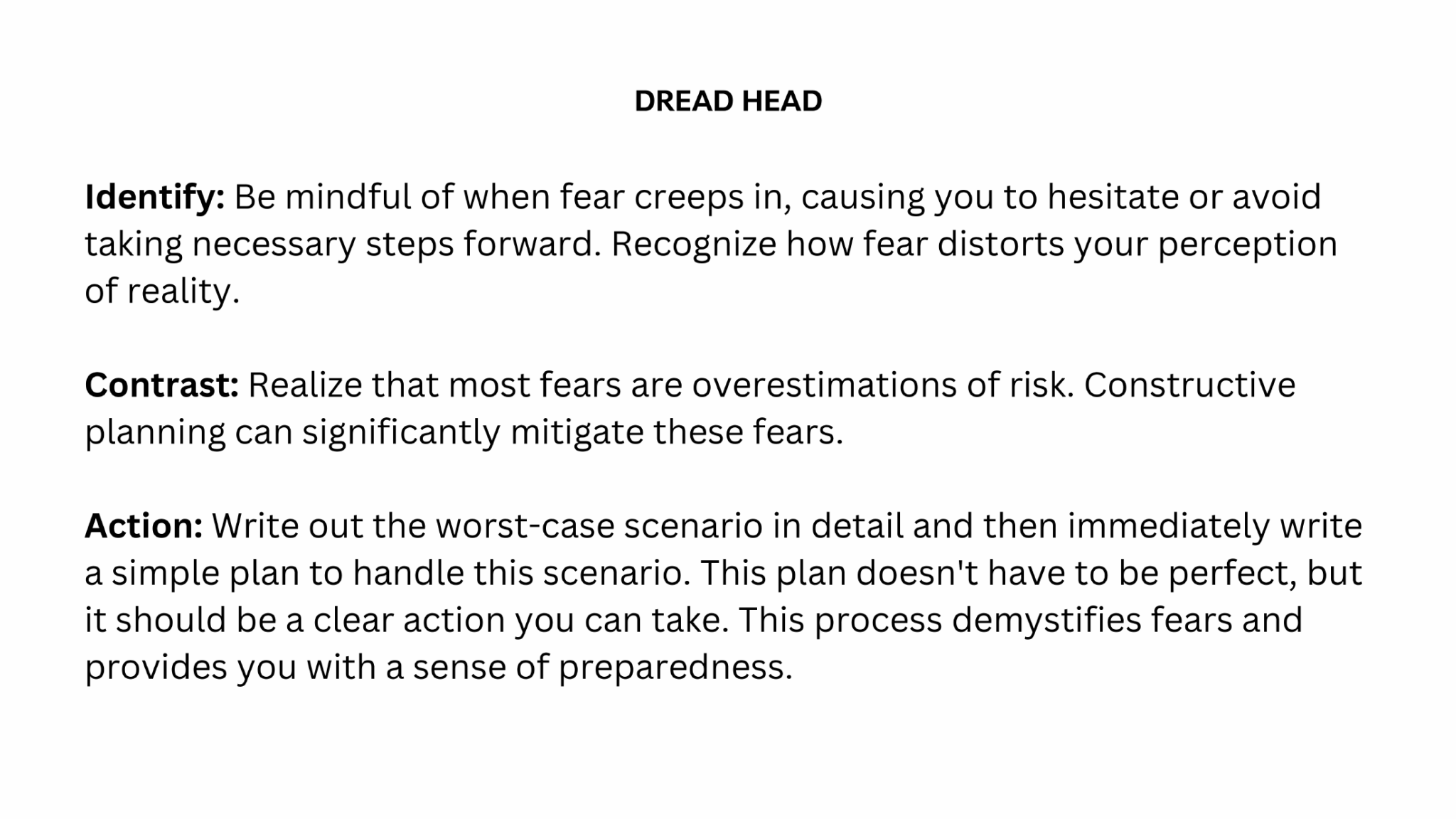
Identify, Contrast and Action for The Dread Head. Image Credit: Addicted2Success
Star Gazer
The Star Gazer has many ideas but lacks focus. Choosing one project and developing a concrete plan helps turn big dreams into actionable steps.
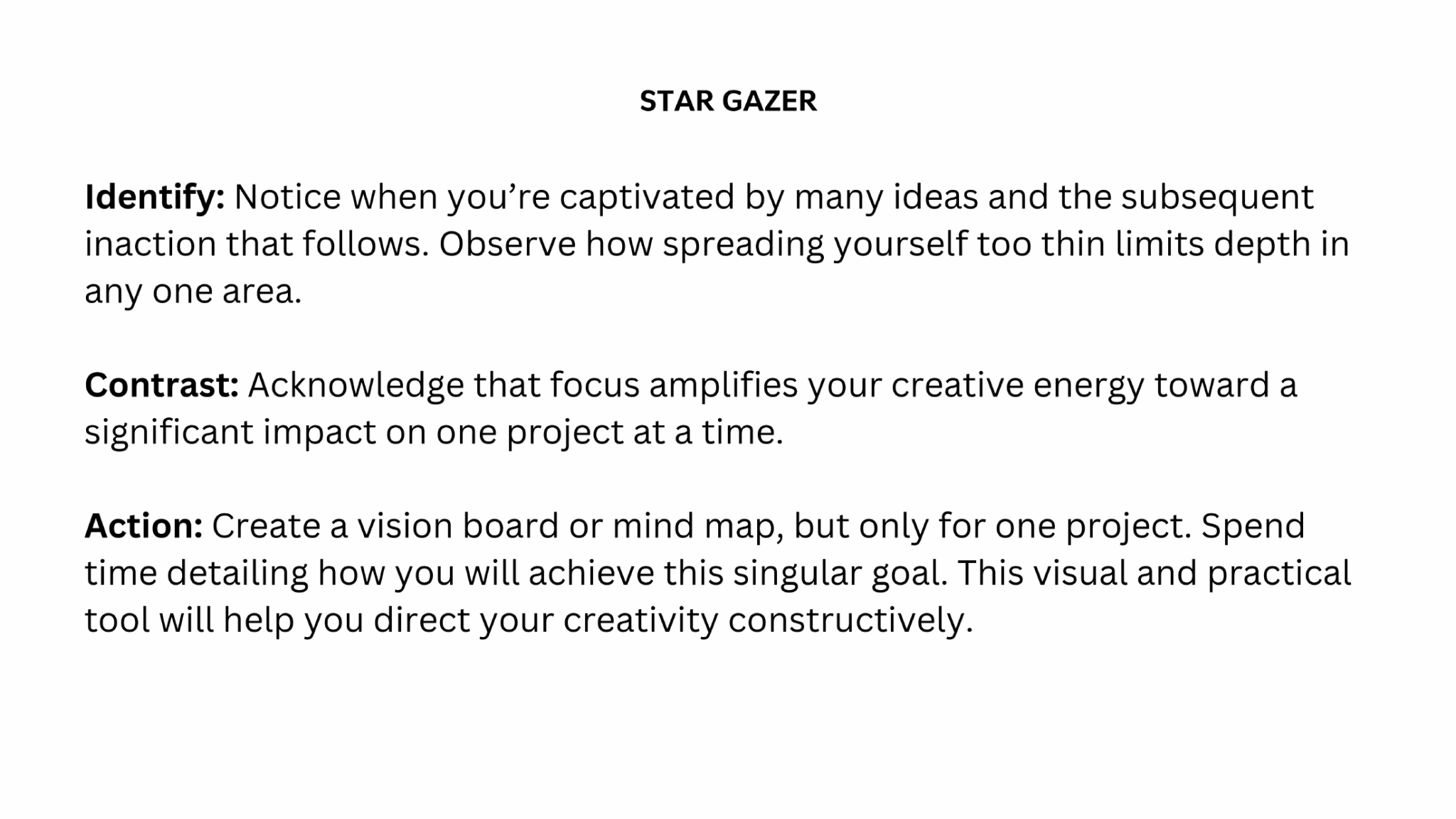
Identify, Contrast and Action for The Star Gazer. Image Credit: Addicted2Success
Diversion Junkie
This pattern involves seeking distractions under pressure. Listing all projects and distractions, then deliberately eliminating those that don’t serve the main goal, helps regain focus and responsibility.

Identify, Contrast and Action for The Diversion Junkie. Image Credit: Addicted2Success
Angry Altruist
People pleasers who neglect their own needs benefit from affirming self-worth. Standing in front of a mirror and vocalizing statements like “I deserve time for myself” helps establish essential boundaries and self-care.

Identify, Contrast and Action for The Angry Altruist. Image Credit: Addicted2Success
Radical Defiant
This rare type instinctively resists external input. Recognizing this automatic resistance and consciously choosing which advice to accept fosters empowerment and connection.

Identify, Contrast and Action for The Radical Defiant. Image Credit: Addicted2Success
Procrastination Is Not Just a Time-Management Issue
Contrary to popular belief, procrastination is rarely about poor time management. The core challenge lies within emotional management—specifically, the fears tied to past failures or anticipated discomfort in the future. As Joel Brown explains in his masterclass, procrastination is fundamentally an emotional struggle rather than a scheduling problem.
“Procrastination, as I’ve shared, isn’t about time management. Very little part of procrastination is like not managing your time properly. That’s not what comes first. It’s the emotional part that is the destructive part to your productivity, okay? Or lack of productivity.”
When procrastinating, individuals are often caught between the “history” of past experiences and the “mystery” of unknown outcomes, resulting in avoidance. Emotional resilience—feeling everything yet moving forward—is key to overcoming procrastination and becoming a productive creator.
Additional Insights from Quiz Participants
Responses to quiz questions highlight common themes across procrastination types:
- 54.6% reported withdrawing from friends and family when feeling down (Question 3).
- 54.6% expressed discomfort being labeled “selfish or lazy” (Question 6).
- 51.4% admitted to having big dreams but lacking a well-thought-out strategy (Question 2).
- 51.3% struggled with consistency due to lack of structure (Question 5).
- 47.6% were highly sensitive to negative judgment (Question 5).

Dashboard proof of question-level answers on the site quiz, all time. Image Credit: Addicted2Success
These responses correspond closely with the procrastination types: withdrawal aligns with the Dread Head pattern, sensitivity and fear of judgment with Angry Altruist, and big dreams without strategy with Star Gazer.
Voices from the Masterclass
Participants in the live masterclass described procrastination in everyday terms, emphasizing avoidance and paralysis rather than calendar mismanagement. For example:
- Chelsea: “Doing everything but what you need to be doing. Pushing things to the last minute.”
- Jen: “Procrastination, for me, equals action and progress paralysis.”
- Michelle: “Self-sabotaging.”
- Quincy: “Habitually telling yourself you will do things later when you know you could do those now.”
Many shared transformational experiences from applying the strategies, such as stepping out of comfort zones, turning fear into motivation, and gaining clarity on their business goals.
Frequently Asked Questions
What is the most common type of procrastinator?
The Obsessive Idealist is the most common type, accounting for 42.8% of 13,614 combined completions and 44.8% of organic site quiz completions. These are self-selected responses, not clinical diagnoses.
How many people took this procrastination quiz?
A total of 13,614 people completed the quiz across organic site traffic and ad campaigns from May 2022 to November 2026.
Is a procrastination quiz result a diagnosis?
No. The quiz offers a framework to understand procrastination patterns based on self-reported traits. It is a tool for self-awareness, not a clinical diagnosis.
Why don’t the question percentages add up to 100?
Because many questions allowed multiple answers, percentages can exceed 100% as participants selected all traits that applied.
How can I find out my procrastination type?
Review the six type descriptions and first-action recommendations above, identify the pattern that resonates most, and take the initial step suggested. Remember, the label is just a starting point.
What do people say procrastination actually is?
Masterclass participants describe procrastination as avoidance, last-minute pressure, self-sabotage, and paralysis of progress—highlighting its emotional rather than logistical nature.
Disclaimer: Addicted2Success content is for general informational purposes only and is not a substitute for personalized advice from a qualified, licensed professional. Always seek professional counsel for your specific situation before making decisions.
For more detailed information and to explore your procrastination type, visit Here.

