
Key Takeaways
The inspiration for Trubar took root during a family vacation to Disney, where Erica Groussman found herself dissatisfied with the existing snack options, describing the experience as making her feel “ucky” and “uncomfortable.” This discomfort sparked the idea for a better protein bar.
Starting small, Groussman sold protein bars at local store checkout counters, quickly seeing demand as customers began buying and local businesses reordered the product.
Earlier this year, Groussman sold Trubar for $173 million but maintained her role as CEO, continuing to lead the company she built from the ground up.
The Origins of a Better Protein Bar
Erica Groussman’s path to food entrepreneurship was unconventional. Growing up, she learned the value of work early through a newspaper route given by her mother. She later pursued communications at UCLA and worked in film finance and real estate before becoming a stay-at-home mom.
Her breakthrough came during a family trip to Disney, where a protein bar from a well-known brand failed to satisfy her beyond taste—it left her feeling physically uncomfortable. “I remember just feeling very ucky,” she recalls. “My belly was very distended and uncomfortable. That was my epiphany. There has to be a better way.”
Determined to create a protein bar that tasted like a dessert but didn’t cause unpleasant aftereffects, Groussman collaborated with a food scientist. This partnership involved rigorous research and sensory testing, focusing on taste, texture, and aftertaste to perfect the product.
“We’ll taste the bar, and I’ll say what I taste,” Groussman explains. “What am I getting afterwards? What’s the aftertaste? What do I want to see more of? Do I want more crunchy?”
Getting Products to Customers
With the product concept developed, Groussman raised initial funds from family and friends and partnered with a food scientist and co-manufacturer to launch Trubar in 2018, stepping into the CEO role.
The earliest flavors—Daydreaming About Donuts, Oh Oh Cookie Dough, Saltylicious Almond Love, and Smother Fudger Peanut Butter—quickly gained traction, with cookie dough emerging as an early bestseller.
Groussman’s initial proof of demand came from placing bars on counters in local businesses like juice shops, delis, beauty salons, and independent stores. She recalls simply asking, “Here, sell these.” The businesses set prices around $3 to $4 per bar and reordered when stock sold through.
“That’s how I knew it was good because they were selling,” she says. “People were buying them and then asking to buy more.”
Making a Costly Mistake
As Trubar gained momentum, Groussman sought to expand beyond small retailers and enlisted help from someone she believed had more protein bar business experience. Balancing motherhood and homebuilding, she entrusted this individual to help manage operations while remaining CEO herself.
Unfortunately, this decision resulted in overspending that outpaced sales, driving the company into $7 million in debt. Groussman reflects that she had underestimated her own knowledge and capabilities.
“I knew more than I thought I knew,” she admits. “We always doubt ourselves.”
The outside operator, she says, “ran it into the ground,” leaving the business deeply indebted despite early sales to smaller retailers. Though her husband encouraged her to view it as a loss and move on, Groussman was determined to persevere.
“It’s a part of me,” she told him. “I really want to keep it going.”
Expanding into Whole Foods and Costco
Groussman employed scrappy tactics to gain access to larger retailers. One breakthrough came through persistent outreach on LinkedIn, securing a trial run at 30 Whole Foods locations around 2020. Despite having no marketing budget, Trubar became the top-selling bar in those stores, competing with established brands like RXBAR and Kind.
Costco presented its own challenges. Initially, Trubar entered Costco Canada with a single truckload during the COVID-19 pandemic, but the brand struggled due to lower market familiarity and pricing disadvantages as a U.S. brand.
The U.S. launch was far more successful, underscoring key lessons in distribution strategy, brand awareness, price positioning, and timing for consumer packaged goods (CPG) founders.
Becoming the CEO of a Public Company
While expanding retail presence, Groussman navigated corporate changes behind the scenes. In 2021, Trubar was acquired by a publicly traded holding company, allowing the brand to grow without Groussman taking on personal debt. She retained her role as CEO.
The holding company’s portfolio included a skincare brand and a CBD company, both of which eventually failed, leaving Trubar as the standout success.
Groussman found this period frustrating, describing how Trubar’s revenue was used to support other businesses despite its own growing momentum. Nonetheless, she remained founder and CEO throughout.
In 2024, she took on an additional role as CEO of the publicly traded company, which was renamed around the Trubar business and its portfolio.
“I was the only one standing,” she says. “I was a CEO of a publicly traded company.”
A Hands-On CEO
Today, Trubar employs around 28 people, and Groussman maintains a hands-on management style. Rather than adopting a distant executive approach, she stays deeply involved in operations, product development, and problem-solving.
Employees know they can approach her directly, and she emphasizes leading by example: “I will not ask you to do something that I wouldn’t do myself.”
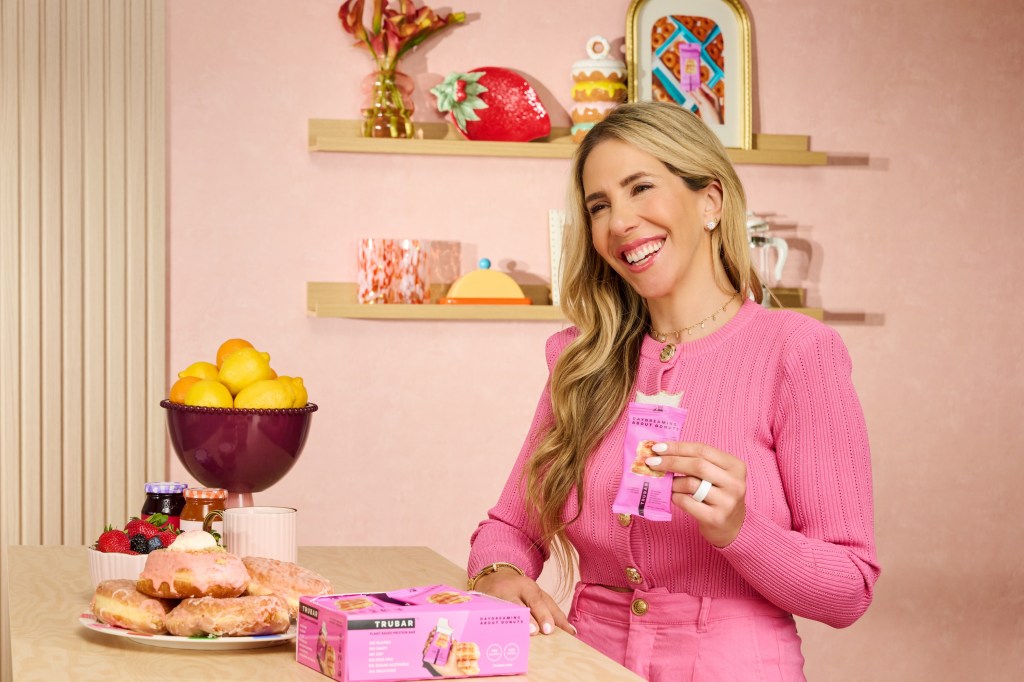
This approach was evident during a recent Walmart product launch. When a shipment was delayed, Groussman personally contacted packaging suppliers outside their usual network to find a provider who could complete the job in two weeks, ensuring the timeline was met.
In another incident, a mislabeled product box—correct ingredients but an incorrect front-facing label—was swiftly fixed by sourcing stickers from a nearby Staples and applying them onsite before delivery.
“When anything is slightly going wrong, I’m like mama bear. What do I gotta do? Who do I need to talk to?” she says. She also stresses the importance of investigating the root cause afterward to prevent future mistakes.
Advice for CEOs
Groussman advocates a practical philosophy of “solve first, diagnose second.” She warns against paralysis by analysis, where teams hesitate to act without perfect information, which can hinder growth.
“Just get 80%, just go,” she advises. “Just start, just do what you can do and just start etching away and moving in the direction.”
Her hiring approach is equally pragmatic: “You interview for your resume; you hire for chemistry.” She values team members who can make decisions, take initiative, and thrive in a fast-moving, sometimes chaotic environment.
“I want my team to be able to make decisions and to grow,” she says. “If they come up with an idea, try it. What’s the harm?”
Scaling After an Acquisition
Earlier this year, Trubar was acquired by Eti Gida, a Turkish snack company, for $173 million, according to Groussman. She continues as CEO, overseeing day-to-day operations, with her core team remaining intact—a critical factor in evaluating the partnership.
For Groussman, the acquisition signals a new phase rather than an endpoint. Trubar recently launched Trubar Kids and Trubar Pro, and she envisions expanding into additional product categories.
“It was always known that they wanted to keep me as well as my team,” she says. “I’m not done. It’s my baby.”

