
Key Takeaways
- Molina and Williams had to get scrappy to finance their business in the early days.
- After a long road to launch and slow start, a viral moment led to millions of dollars in sales.
- Now, the sisters are continuing to grow their company and its community.
In 2013, St. Louis, Missouri-based sisters Jane Molina and Joy Williams found themselves in a whirlwind of responsibilities. Between running their family’s longstanding heating and cooling business and raising five young children combined, their schedules were packed. Yet, amidst this busy season, an idea sparked that would soon revolutionize the way mothers soothe their babies.
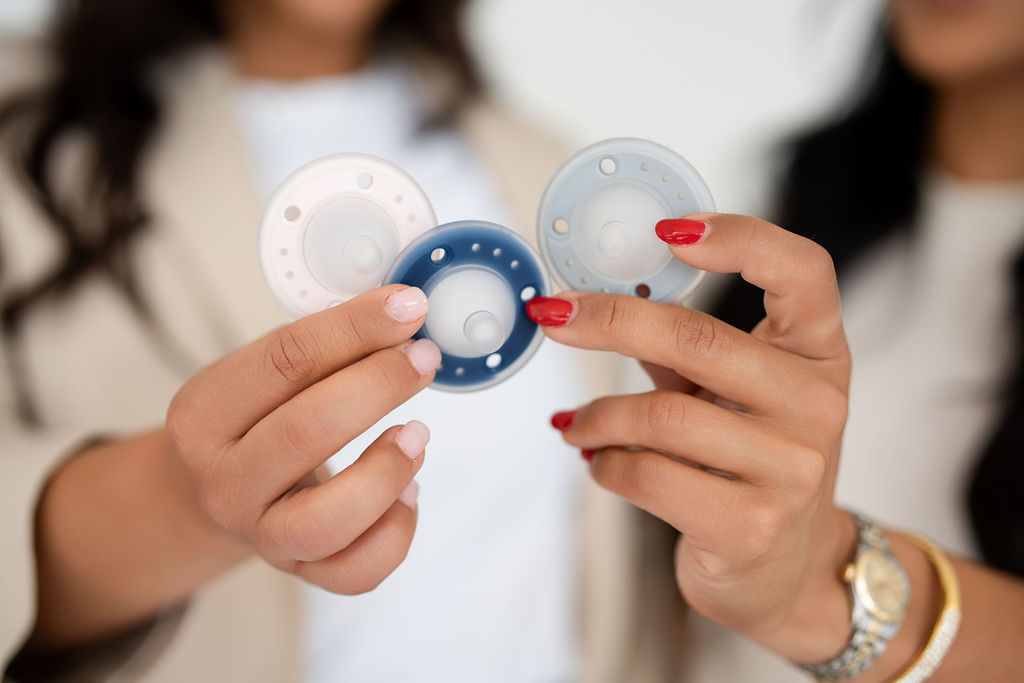
While breastfeeding her third son, Molina noticed that sometimes he latched not to nurse but for comfort. Searching for a pacifier that could replicate the feel of real breast tissue and encourage a wide, natural latch instead of the typical tight, pursed one, she found no product that met this need. This gap in the market inspired her to create her own solution.
Molina shared her idea with Williams, whose marketing expertise would prove invaluable. Though initially skeptical about starting a new business amid financial struggles—especially with their family HVAC company still recovering from the 2008 recession—Williams soon became convinced. She recalls, “We basically were walking around with holes in our shoes, eating bologna sandwiches and drinking Coca-Cola, paying payroll and then having $150 in our bank account at the end of a week.”
Starting a New Business to Soothe Babies: Ninni Co.
Driven by Molina’s vision, the sisters founded Ninni Co., named in honor of their grandmother who breastfed 10 children and affectionately called the act “the ninni.” The goal was clear: to create an ultra-soft silicone pacifier that truly comforts babies while supporting natural latch behavior.
However, bringing this idea to life was no quick feat. For approximately seven years, Molina and Williams balanced their existing responsibilities while developing Ninni Co. on the side. They leveraged support from family—especially their mother—and tapped into personal savings and retirement funds to finance early prototypes, which cost less than $1,000, and engage legal counsel to secure a patent.
Selling the HVAC Business to Fund Ninni Co.
By 2019, the sisters committed fully to their new venture. They sold the HVAC business for $500,000, payable in installments, and after settling $120,000 in vendor debts, poured the proceeds into Ninni Co. Williams clarifies, “People hear, ‘Oh, you sold a business and used that money,’ but it’s not all glitz and glamour or some exorbitant amount.”
Seeking further support, they joined incubator programs such as BioSTL and the Center for Emerging Technologies’s Square One program, and secured $10,000 through the Level Next program. These funds enabled consumer testing and helped them secure a manufacturer in upstate New York—the same partner they use today.
Faced with a $50,000 to $75,000 cost to create the product mold, the sisters needed additional capital.
Meeting for Coffee Leads to a Much-Needed Loan
In a stroke of luck at a networking event, Molina met a man from Carrollton Bank. She brought along the prototype tucked in a small box—something she had picked up from a discount store—and shared the concept over coffee. His wife was breastfeeding at the time, so he immediately understood the product’s value.
This encounter resulted in a structured loan that helped push development forward. Additionally, the sisters secured a $70,000 angel investment from two older gentlemen in their church in exchange for a 20% equity stake. Reflecting on this, Molina says, “It was a large chunk that we unloaded right at the beginning, but of course we were valued at zero. So where Joy and I were at, $70,000 might as well have been $250,000.”
Launching the Product on Shopify in 2021
By March 2021, the sisters were eager to test the market. They launched Ninni Co. on Shopify with a modest inventory, pricing the pacifiers at $12.99. Without professional photography, they relied on stock images and grassroots social media promotion.
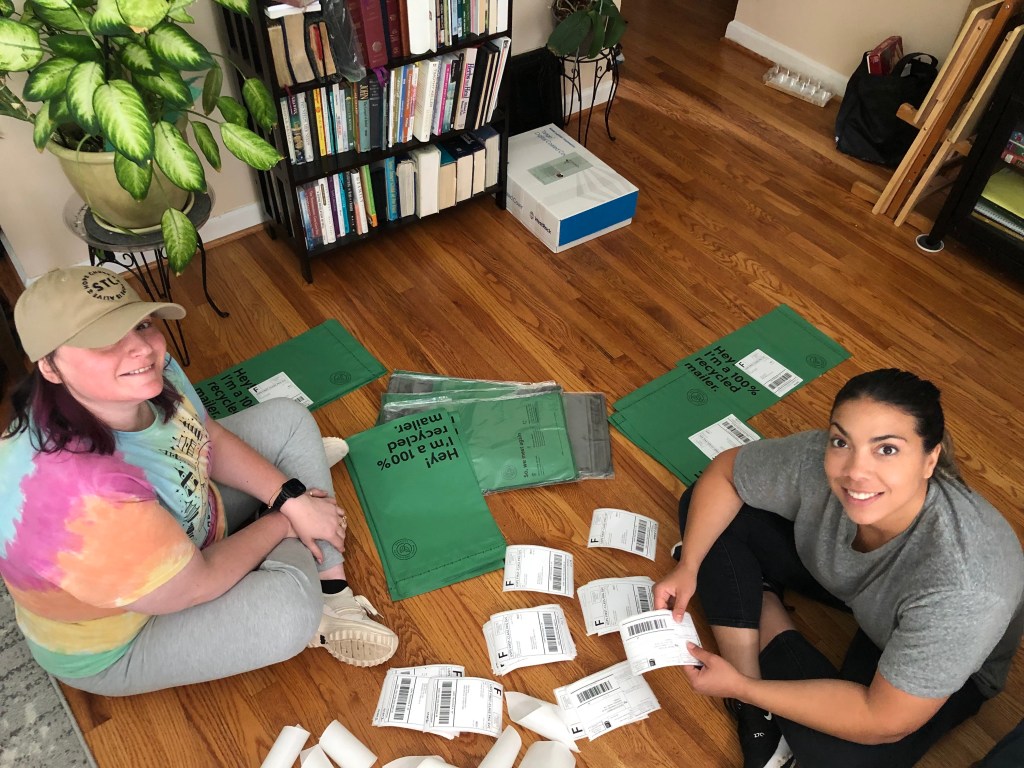
Initial sales were modest, averaging about 100 units on day one, mostly supported by friends and family. For six months, order fulfillment took place in their mother’s basement, underscoring their hands-on dedication.
Then, in April 2021, a viral TikTok video changed the trajectory of their business. A friend of Williams, an influencer and fellow parent, shared an Instagram reel praising the pacifier. Williams reposted it on TikTok, and that night, their Shopify alert notifications — the “dings” tracking sales — went off repeatedly.
With only 35 pacifiers in stock and 250 more at the factory, they scrambled to meet surging demand. Williams leaned into her marketing skills, posting updates on Instagram and Facebook about upcoming product drops and color options, creating a sense of exclusivity that resonated deeply with customers.
Going Viral Brings a Serious Revenue Boost
The viral moment propelled Ninni Co. into impressive growth. In 2023, the company generated approximately $2.2 million in annual revenue. By 2024, that figure rose to $2.9 million, and in 2025, it soared to $5.3 million, marking an 83% year-over-year increase. Projections for 2026 estimate revenue reaching $6.5 million, with daily sales exceeding 1,000 pacifiers.
Within four years, Molina and Williams repurchased 95% of the company from their angel investors. Today, the co-founders employ eight people but still personally manage order fulfillment, maintaining a close connection to their customers and operations.

Learning a Lesson Through Amazon Selling
Staying true to their mission, the sisters have remained selective about distribution. Ninni Co. sources materials from the U.S. and Sweden and manufactures domestically, resulting in slimmer profit margins compared to overseas production. This has led to careful channel management.
For instance, they discontinued selling on Amazon after only four months. “It was one of the most stressful, hardest times of our company,” Molina says. Amazon diverted traffic from their own website, withheld funds for weeks, and took up to 50% of the sales revenue. The investment in a dedicated Amazon team did not yield a sustainable model.
Williams emphasizes, “Not every platform is made for every single business or product. Everyone is unique, and you have to honor that.”

Being the primary point of contact with their customers has its advantages. The sisters receive direct and valuable feedback, fostering strong communities on Instagram and Facebook. This direct connection also empowers them to decline multiple buyout offers, remaining independent and authentic.
Williams reflects, “We wanted to build this business as the two moms behind the dream. We really feel like we’re living the American dream, and we love what we do every day.”
For the full story, visit Here.

