
Transforming Preventive Health: The Story Behind Function’s $2.5 Billion Vision
Pranitha Patil, co-founder and chief business officer of Function, shares the compelling journey of building a groundbreaking preventive health membership platform valued at $2.5 billion. Function was co-founded alongside Jonathan Swerdlin (CEO), Dr. Mark Hyman (chief medical officer), Seth Weisfeld (chief design officer), and Dan Swerdlin (general counsel). The platform offers members access to over 160 lab tests, advanced MRI and CT imaging, and AI-powered insights that decode results and recommend actionable next steps. With an annual membership of $365, Function provides a dramatically more affordable alternative to independently purchased comparable testing, which costs roughly $15,000, according to the company.
Image Credit: Function. Pranitha Patil.
Personal Experience Fuels a Preventive Health Vision
Patil’s inspiration for Function traces back to her own health struggles during her teenage years and early twenties. Diagnosed with polycystic ovary syndrome (PCOS), pre-diabetes with an HbA1c hovering around 6%, and genetically high cholesterol, she found herself navigating a healthcare system ill-equipped to provide tailored guidance for someone like her—a young South Asian woman facing complex markers. “The healthcare system is set up so that you only go once you have a problem,” Patil explains, emphasizing a key gap in early detection and prevention.
Her personal journey involved painstakingly tracking her blood work and trying to interpret results independently, highlighting the urgent need for a comprehensive, accessible preventive health solution. “Had I seen these signs way earlier, these markers being elevated, I would’ve done something about it,” she recalls. This gap in clinical data and support became the foundation for Function’s mission: to empower individuals with actionable health insights long before symptoms appear.
Dropping Out of Harvard to Build a Health Innovation
While pursuing a master’s degree in design engineering at Harvard, Patil conceived the idea for Function. Initially, she believed such a comprehensive preventive health platform must exist somewhere. When she met co-founder and CEO Jonathan Swerdlin, the vision crystallized into a shared conviction: “This product needs to exist.” With little hesitation, Patil chose to leave Harvard early to focus on bringing Function to life.
The founding team’s diverse expertise—from medical science to design and legal counsel—was united by a common goal: giving people ownership over their health. “That mission hasn’t changed in the five and a half years since Function’s founding,” Patil says. Unlike a typical annual physical that provides a single snapshot, Function offers continuous, cutting-edge health data through ongoing lab testing and advanced imaging.
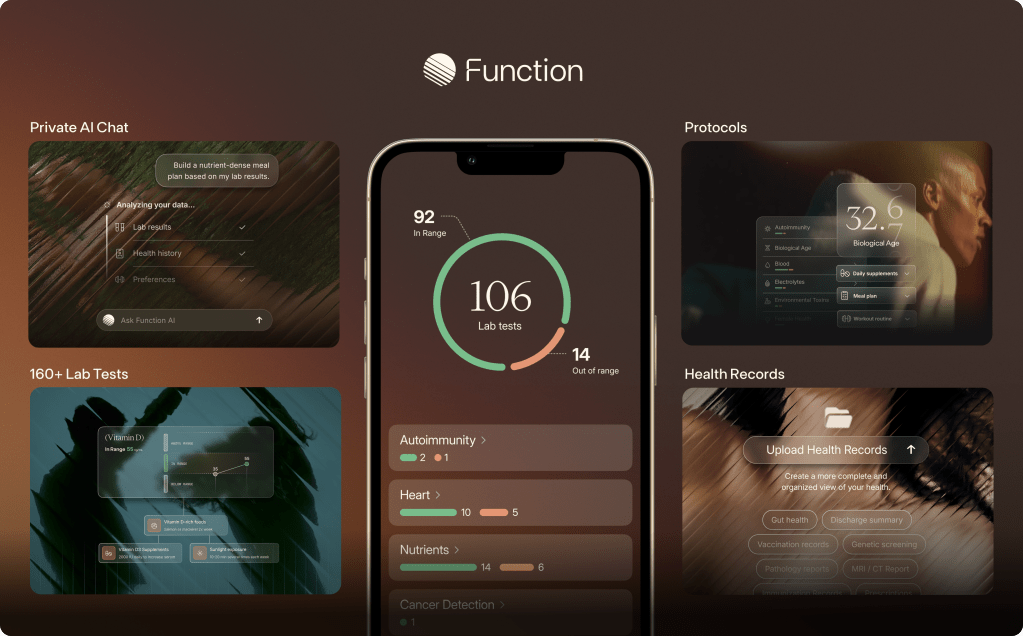
Image Credit: Function
Convincing Investors with a Vision Powered by AI
Function’s initial offering centered on comprehensive lab testing of blood and urine. However, the founders always envisioned expanding into a broader health ecosystem. “The most challenging part in the early days was convincing investors of the bigger vision when it wasn’t here yet,” Patil remarks. The team painted a picture of combining unprecedented data sets—labs, imaging, wearable devices—augmented by artificial intelligence to revolutionize personal health management.
This visionary approach resonated with investors, leading to successful Series A funding and rapid growth. Today, Function’s valuation stands at $2.5 billion, marking its transition into what Patil calls “act two.” The company’s ambitious goal is to reach eight billion people worldwide, leveraging AI to scale and personalize health insights.
Harnessing AI for Personalized Medical Intelligence and Communication
AI lies at the core of Function’s innovation. Members engage with a private AI chat interface to interpret their results, build personalized health plans, and deepen their understanding of necessary actions. Beyond communication, Function is developing a medical intelligence lab that integrates diverse data sources—including labs, imaging, wearables, and medical histories—into a comprehensive, longitudinal health profile.
Patil emphasizes the accessibility of these insights: “The information is summarized in a way that the average person on the street can actually do something about it.” Achieving this level of clarity and actionability would be impossible without AI. The company’s multidisciplinary team of researchers, clinicians, and AI experts is dedicated to bridging technology and medicine seamlessly.

Image Credit: Function
Strategic Acquisitions Accelerate Growth and User Experience
To scale efficiently and enhance member experience, Function strategically acquired companies providing complementary services. These include advanced imaging, supplement intelligence through SuppCo, and home blood draws via Getlabs. Patil notes, “It would take too long to build everything in-house. And we needed to make it seamless for people to take action.” Making testing and subsequent health steps easy and integrated is key to sustained behavior change.
Patil reflects on the irreversible nature of data access: “We’re never going back to a time where we don’t have access to this data. Once you open Pandora’s box, it’s here.” This responsibility underscores the transformative potential of shifting focus from healthcare systems to actual health outcomes at a population level.
Building Healthcare Solutions with Empathy and Long-Term Impact
Patil expresses gratitude for the company they have built and the vast potential ahead. She highlights the unique challenges and opportunities in healthcare innovation: “It is most certainly bigger than yourself. The work is bigger than you, and the sooner you realize that, the better, because it humbles you in the best way.” Healthcare’s complexity, with legacy systems and entrenched practices, demands patience and resilience.
Her advice to aspiring healthcare entrepreneurs is clear: “If you have an idea that you believe is actually novel and should be in the world, just get started. You can iterate. No one’s grading you.” The healthcare sector lags behind others by about a decade in technological adoption, but AI offers a fast track to catch up while maintaining human empathy.
Looking forward, Patil envisions a world where people detect health issues before they escalate, take preemptive action, and cultivate strong relationships with their health. “We deserve that. If we can make it that much easier for people, then we’ve done something right.”
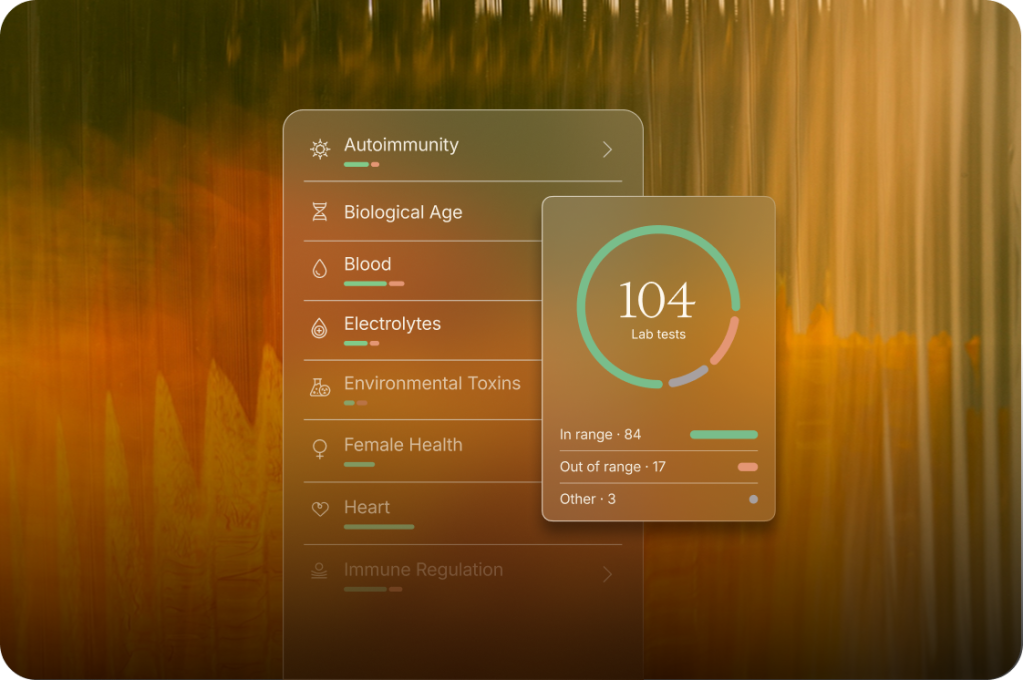
Image Credit: Function
To learn more about Pranitha Patil’s inspiring journey and how Function is reshaping preventive health with AI, visit Here.

