
The 1722 Arrival: A First Encounter Shrouded in Mystery
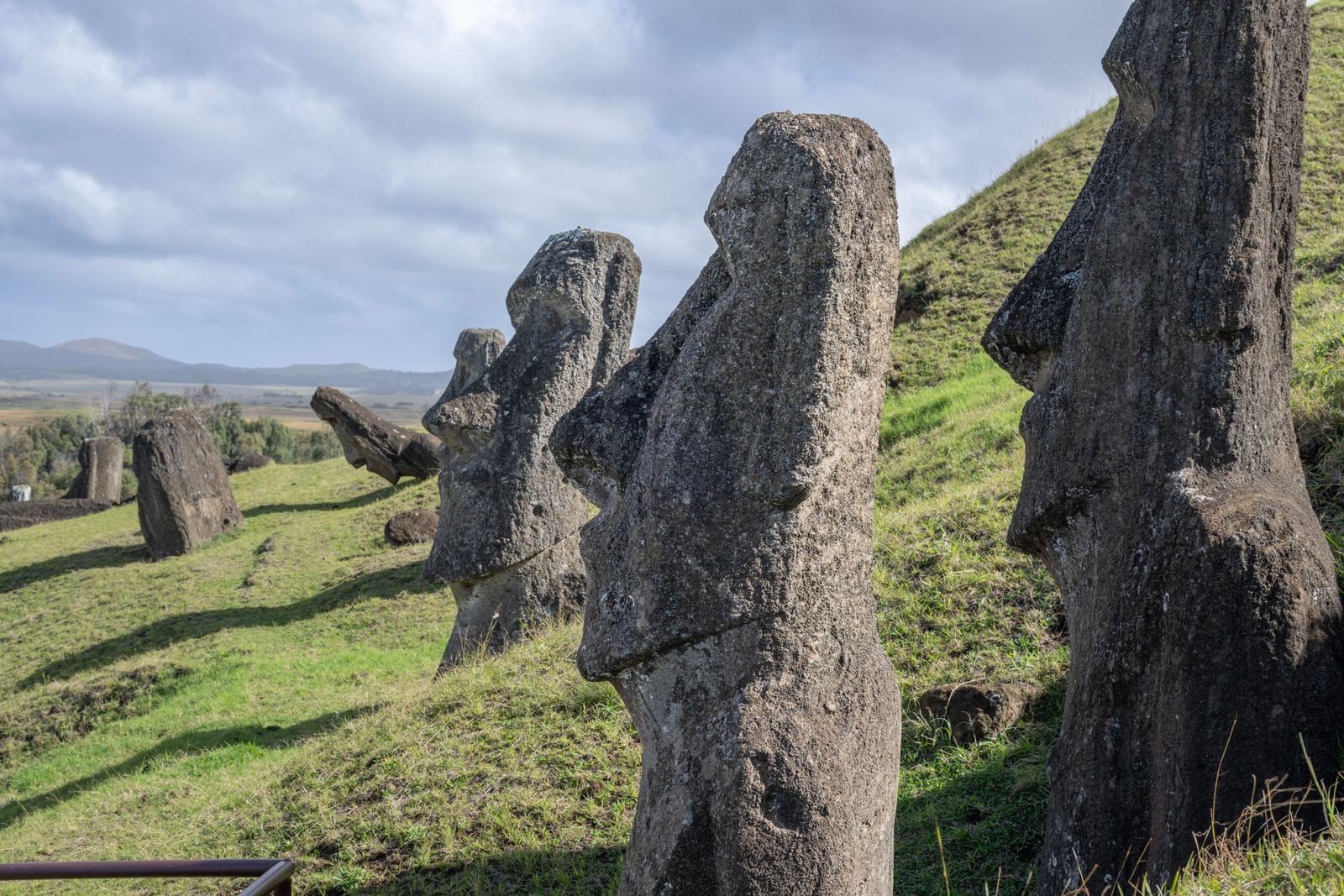
On Easter Sunday in 1722, Dutch admiral Jacob Roggeveen anchored his fleet off a small, treeless volcanic island in the South Pacific. What he documented in his logbook became the origin of one of the most enduring mysteries in European exploration history. Roggeveen’s crew encountered hundreds of towering stone giants—moai—that lined coastal platforms, some reaching heights of ten metres. However, the islanders who welcomed them seemed to possess no cranes, timber, draft animals, or any apparent technology that could explain the construction and transportation of these colossal statues. This initial observation, though factual in some respects, sowed the seeds of misconceptions that would persist for over 300 years.
The misinterpretation began immediately and was perpetuated by generations of visitors who arrived with preconceived notions. Each group interpreted the island’s evidence through their own biases, reinforcing inaccurate theories about the islanders and their culture.
What Roggeveen Actually Recorded
Roggeveen’s expedition consisted of three ships under the Dutch West India Company. His mission was not to discover Easter Island—known locally as Rapa Nui—but to find a mythical southern continent that, as we now know, does not exist. The crew’s encounter with the island was brief, lasting roughly a day before hostilities erupted, and they departed swiftly.
According to Roggeveen’s log, the islanders approached in canoes, exhibiting strong physiques, friendly demeanors, and distinctive hairstyles complemented by bright white teeth. The coastline was dominated by the moai statues, characterized by their elongated faces and pronounced brows—features that would forever define Rapa Nui in the European imagination.
Roggeveen’s men estimated the island population to be in the low thousands. They observed a scarcity of trees and found no ropes or timbers suitable for moving multi-ton statues standing far from their volcanic quarry. This absence of obvious technological means led the Dutch sailors to suspect that crucial information was missing from the scene. While they were correct to sense a gap, their assumptions about the islanders’ capabilities were largely mistaken.
The Problem with a One-Day Expedition
Modern science has extensively studied the reliability of eyewitness accounts, emphasizing how memory can be influenced by prior knowledge, stress, and limited exposure. A 2026 review in Nature highlights research by experts like Elizabeth Loftus and Gary Wells, demonstrating how eyewitness confidence often diverges from accuracy, especially under stressful or unfamiliar conditions.
Roggeveen’s crew faced numerous memory-degrading factors: an unfamiliar environment, brief and tense interactions, cross-cultural differences, and a ship’s log written after the fact by a few authoritative voices. Such conditions fall short of the rigorous standards applied today to eyewitness testimony or ethnographic documentation.
Cross-cultural psychology also sheds light on the challenges of accurate observation. Sheree Josephson, a communications professor at Weber State University, along with colleagues at Ball State University, explored the “cross-race recognition deficit”—a phenomenon where individuals find it more difficult to accurately identify members of ethnic groups different from their own. Their experimental study, detailed in Visual Communication Quarterly, found correct identifications across ethnic lines to be as low as 40%, with higher rates of errors and misidentifications.
Importantly, Roggeveen was not merely identifying individuals but categorizing an entire civilization based on minimal contact and filtered through 18th-century European assumptions about technology and societal development. This fundamental misclassification skewed all subsequent interpretations.
The Log Rope Theory That Lasted 300 Years
Roggeveen’s observation of a treeless island led later Europeans to hypothesize that trees once existed but were cut down to create rollers and sleds for moving the statues. Since trees were now scarce, the popular narrative became one of ecological self-destruction: the islanders supposedly deforested themselves while transporting the moai, leading to societal collapse.
However, Rapa Nui oral traditions offer a very different explanation. The islanders consistently described how their ancestors moved the moai by “walking” them along the roads. This account was dismissed by European scholars as mere folklore, a label that persisted for centuries despite its cultural significance.
What the 2025 Physics Actually Showed
Anthropologists Carl Lipo and Terry Hunt challenged the dismissal of the “walking” theory and pursued a scientific approach to test its feasibility. Their research, covered by Gizmodo, involved analyzing 962 statues using high-resolution 3D models. They discovered consistent design features: wide D-shaped bases, forward leans, and centers of mass optimized for rocking motion.
To validate the theory, the researchers constructed a 4.35-tonne replica moai. With only ropes and the coordinated effort of eighteen people, they successfully “walked” the statue approximately 100 metres in 40 minutes. The experiment demonstrated that the statues could indeed be transported upright in a controlled rocking motion.
The island’s roads themselves supported this hypothesis. According to Artnet News, the Rapa Nui roads are about 4.5 metres wide with concave cross-sections—features that would stabilize a rocking moai in transit. Over time, the repeated passage of statues deepened grooves in the road, indicating deliberate engineering for this mode of transport.
This research vindicated the Rapa Nui oral tradition, revealing that the songs and stories passed down through generations were more than myth—they were technical instructions describing a sophisticated engineering method.
The Cognitive Machinery of Getting It Wrong
Why did Europeans misunderstand the Easter Island mystery for three centuries? The issue was not a lack of evidence, but rather the dominance of cognitive biases and preexisting frameworks. Research on cognitive biases in social perception explains how people interpret ambiguous information about unfamiliar groups through heuristics shaped by their prior beliefs.
Roggeveen’s crew arrived with the assumption that non-European peoples with seemingly limited material culture could not have engineered the island’s monumental statues. This bias led to alternative explanations involving lost civilizations, ecological disaster, and eventually even extraterrestrial intervention.
The authentic Rapa Nui explanation was dismissed without thorough consideration, a failure echoed in Josephson’s eyewitness studies and the broader literature on memory and perception. This combination of overconfidence, limited experience, and entrenched beliefs produced a narrative that seemed plausible but was fundamentally flawed.
In a courtroom, such errors might lead to wrongful convictions; in archaeology, they resulted in centuries of misinterpretation and missed understanding of Rapa Nui’s ingenuity.
The Last Uninhabited Place
The Rapa Nui people arrived on the island around 1200 AD, completing the final leg of a long human migration across the Pacific. They encountered a forested island rich in fish and natural resources, upon which they built a unique cultural legacy. Nearly 900 moai were carved from a single volcanic quarry, some requiring over a year of dedicated work by specialized teams.
These statues were moved using the walking method, along roads purposefully engineered for this task. The knowledge of this technique was preserved in songs that survived European contact, population decline due to introduced diseases and slave raids, and external reinterpretations of Rapa Nui history as a cautionary ecological tale.
Today, the very coastline where Roggeveen first anchored faces new threats. A 2025 study, reported by UPI, projects that rising sea levels could submerge over 50 archaeological sites, including Ahu Tongariki, one of the island’s largest moai platforms, by 2080. The invaluable physical record decoded by Lipo and Hunt is now under urgent threat.
What the Memory of the Encounter Is Worth
The 1722 landing epitomizes a broader pattern of how limited-contact outsiders, armed with strong preconceptions and authority, shape narratives about unfamiliar cultures. For three centuries, the descendants of the islanders were told stories about their ancestors’ achievements based on an afternoon’s observation by sailors who were searching for something else entirely.
Recent editorials from Silicon Canals explore how the human brain organizes memories around emotional peaks and endings, highlighting that recall is a compression algorithm prone to discarding inconvenient details. When such compressed recollections are codified in authoritative archives like ship logs, they become the historical record—however incomplete or inaccurate.
The moai statues were “walking” all along. It simply took science 303 years to listen to the songs that had always been telling the truth.
Read more about this fascinating story Here.

