
The Folder: More Than Just Paperwork
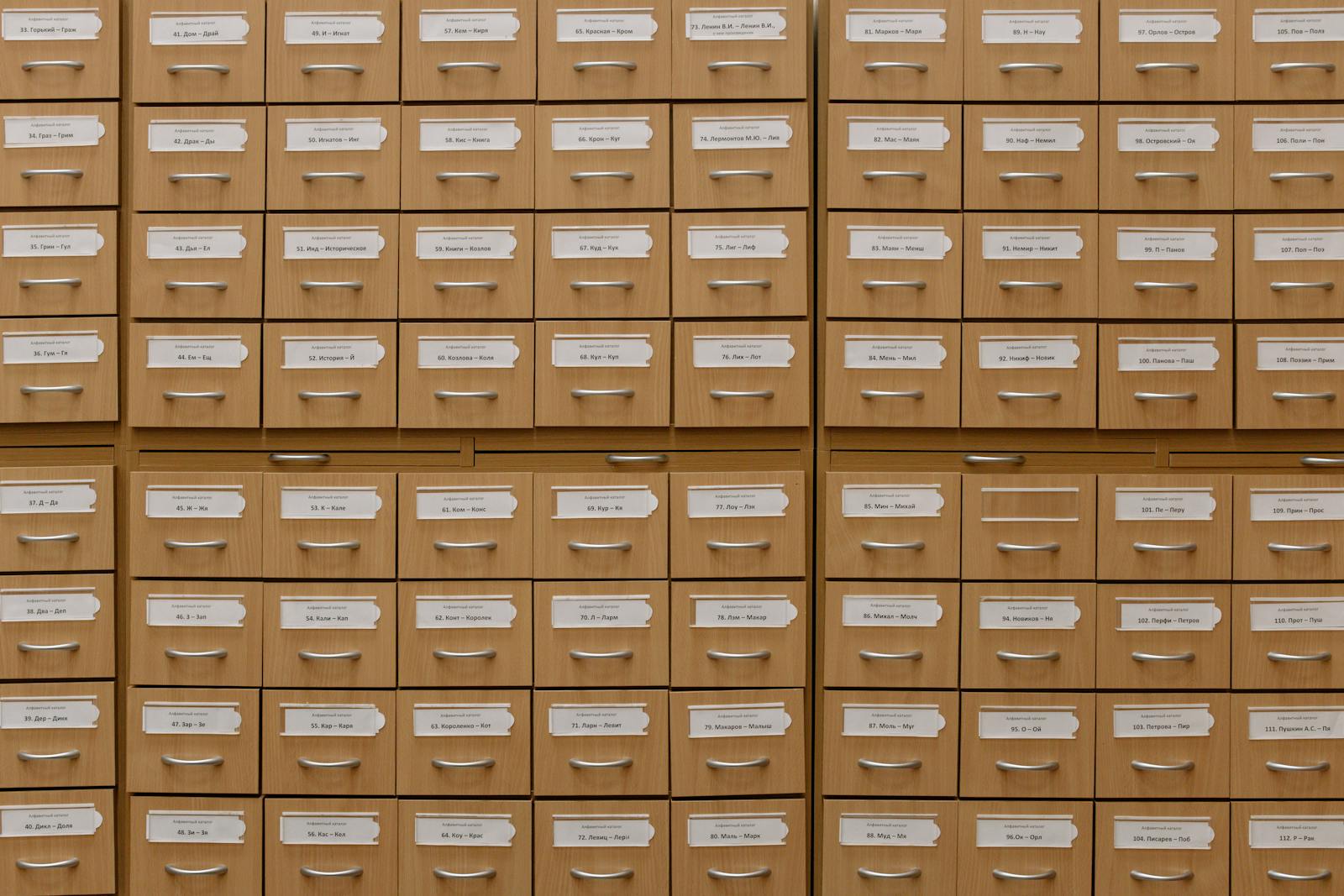
Somewhere in a second drawer of a filing cabinet, a plastic accordion file behind a couch, or a shoebox perched atop a wardrobe, a folder quietly exists. Inside it are warranty cards, old leases, paid utility bills, and dealership invoices marked with handwritten notes only the owner truly understands. To an outsider, this might seem like an unusual hobby or an overly meticulous habit. Yet for the person who built it, this folder represents a safeguard – the fragile barrier between order and a disaster they have already witnessed.
People often label this behavior as “uptight” or compulsive. But the truth is far more nuanced: it’s a form of memory, a tangible archive of past experiences translated into a survival strategy.
Understanding the Roots of Meticulous Record-Keeping
Most adults who maintain detailed paper records didn’t suddenly decide one day to become organized. Instead, they grew up watching someone else struggle — often a parent — caught off guard by missing paperwork at a critical moment. It might have been a landlord demanding proof of rent payment, a bank requesting an original loan document, or an insurance company needing a repair date. The parent’s scramble, frustration, and embarrassment left a lasting impression on the child observing it, teaching an unspoken but powerful lesson: lacking the right documents can make even grown adults feel small and powerless.
This behavior isn’t about anxiety or perfectionism in most cases. Instead, it’s a rational response rooted in a specific lesson learned early in life. Psychology sometimes pathologizes this kind of organization, lumping it under anxiety disorders or obsessive-compulsive tendencies. But more often, it’s a practical, learned response to an unpredictable world—one where being able to prove your claims is a form of protection.
The Folder Is Not Anxiety; It Is Evidence
Research increasingly shows that childhood adversity shapes brain development and behavior in complex ways. For example, a study published on ScienceDaily in March 2025 highlights how unpredictable early environments can influence how individuals respond to stress and uncertainty later in life. The folder, in this context, is a direct reaction to early unpredictability: a way to construct predictability and control where none was provided.
Rather than a phobia or irrational fear, the folder represents a working model of the world — one where systems demand proof, and the ability to provide it equates to safety. This perspective reframes the behavior from being “uptight” to being pragmatically prepared.
What Children Actually Witness
To understand the depth of this behavior, consider the scenes children observe:
- A father on the phone, insisting he remembers paying a bill but unable to find the cancelled cheque stub;
- A mother repeatedly rifling through drawers, searching for a warranty to return a faulty appliance;
- A grandparent being told by a clerk that without original documentation, nothing can be done.
Children may not grasp the financial or bureaucratic details, but they absorb the emotional cues: the drop in voice, the transition from confident adult to vulnerable supplicant. These moments imprint a silent vow: I will not let that happen to me.
Decades later, the folder stands as a testament to that vow — holding onto every receipt and bill, not necessarily because they will be needed, but because losing them could reawaken unresolved feelings of vulnerability and helplessness.
Coping Mechanism or Quiet Competence?
Psychology Today defines coping mechanisms as habitual responses to stress. Yet the folder is less about avoiding stress and more about pre-empting it. There’s a critical distinction between behaviors that numb feelings (like drinking alcohol) and those that create safety and enable functioning (like organizing paperwork).
The folder, even when it borders on ritual, is often the more competent choice. It keeps a person engaged with life’s administrative demands and prevents the alienation that comes with being unprepared. Unlike those who shut down emotionally, the folder-keeper remains legible to the systems that eventually require proof.
The real test isn’t whether the behavior looks tidy or excessive to others, but whether the person can discard a five-year-old bill without feeling a visceral recoil. That hesitation reveals the deeper layers beneath the behavior.
Why Some Children Build Folders and Others Don’t
Interestingly, not every child exposed to these stressful scenes becomes an obsessive filer. Some respond by disengaging entirely from paperwork, treating any administrative task as something to avoid. Why the difference?
A Yale study published in Communications Psychology in March 2025 found that low-to-moderate adversity during middle childhood and adolescence can foster resilience to anxiety, especially when paired with the brain’s capacity to differentiate between threat and safety cues. The timing and context of the stressor are critical.
Children who witnessed paperwork struggles at ages eight or nine, in otherwise stable households, often developed organized systems to manage potential future crises. Conversely, those exposed to similar stress at younger ages, in chaotic environments, were more likely to avoid engagement altogether because the system itself felt unsafe.
The Intergenerational Transmission of the Folder
The folder seldom appears out of nowhere; it’s often part of an intergenerational legacy. Research on intergenerational trauma shows how behaviors, stress responses, and coping strategies can ripple through generations.
For example, a grandmother who kept every document in a tin under her bed due to refugee experiences may pass on a culture of meticulous record-keeping to her daughter, who files everything in cabinets to avoid bureaucratic humiliation. The grandchild then inherits this system, organizing receipts and bills for problems they may never face. The original threat changes, but the behavior persists — a hallmark of trauma transmission.
The Costs of the Folder
While the folder is a functional and often life-saving adaptation, it does come with costs. First, there is the time investment. Hours spent maintaining records that might never be needed can become burdensome. Second, relationships can suffer, as partners or housemates may find the system baffling or frustrating. The folder-keeper may become defensive, creating relational tension that outweighs the loss of a single receipt.
The folder-keeper’s pattern — running toward potential anxiety to neutralize it — contrasts with those who avoid anxiety-provoking situations altogether. Both stem from the same core impulse but differ in social acceptability and visibility.
Family of Childhood-Witness Adaptations
The folder is just one behavior among many that arise from witnessing adult vulnerabilities as a child. Others include compulsively helping at others’ homes to feel welcome or preferring solitude due to exhausting social dynamics. These adaptations, often mistaken for personality quirks, are in fact evidence of early life lessons about safety and control.
In an earlier analysis of people thriving under pressure by building systems, it was argued that resilience often reflects better infrastructure rather than innate toughness. The folder is a personal infrastructure — akin to a startup founder’s meticulous fundraising spreadsheet — born from the same impulse: to impose order on chaos.
The Limitations of the Folder
Despite its utility, the folder cannot heal the original emotional wound. It can prevent recurrence of the same crisis but cannot go back in time to reassure the child who witnessed their parent’s helplessness. The folder is a forward-facing tool, while the trauma resides in the past.
This explains why even with a perfectly maintained system, some folder-keepers feel a persistent low-level anxiety when an unexpected envelope arrives. Their system functions well, but their body remains keyed to a threat that was never fully processed.
Nevertheless, the folder is one of the more functional outcomes of absorbing adult overwhelm as a child — it’s not perfect, but it is competent.
For the Folder-Keeper Reading This
You are not uptight. What you have built is real and meaningful. It may be composed of paper and labels rather than financial assets, but it was the best safety you could fashion with the tools you had as a child paying close attention.
But here is a question worth sitting with, offered from personal experience: when does the eight-year-old inside get to stop running the household? The folder has likely saved you countless times, but it is also a contract you signed with a younger you — a contract you’ve been upholding without reconsideration.
The danger lies not in the paperwork itself, but in mistaking the act of maintaining it for genuine safety. The child who built the system was protecting an adult who may no longer need protection in the same form. The folder works, unquestionably. The real question is whether the part of you still filing is the same part that once watched someone you love shrink at a kitchen table, and if that part will ever be allowed to mature — or just get better at organizing.
There may not be a clean answer. For now, the filing cabinet remains in the second drawer.
Feature image by Tima Miroshnichenko on Pexels
Source: Here

